Science and Medicine
1976 swine flu outbreak
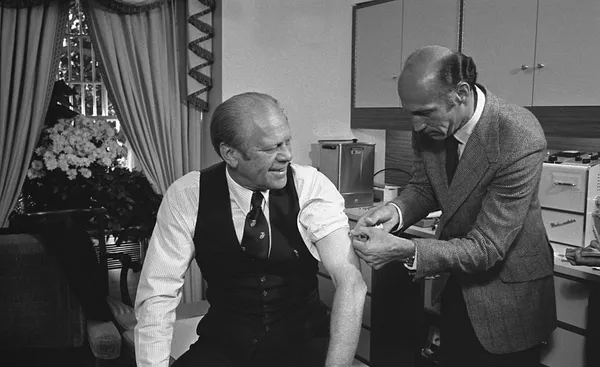
In 1976, an outbreak of the swine flu, influenza A virus subtype H1N1 at Fort Dix, New Jersey caused one death, hospitalized 13, and led to a mass immunization program. After the program began, the vaccine was associated with an increase in reports of Guillain–Barré syndrome (GBS), which can cause paralysis, respiratory arrest, and death. The immunization program was ended after approximately 43 million United States citizens had been administered the vaccine. Richard Krause, director of the National Institute of Allergy and Infectious Diseases from 1975 to 1984, writes that the government response to the swine flu outbreak was considered to be too fast. The Centers for Disease Control and Prevention states, "Those who received the 1976 swine flu vaccine had a slight increased risk for developing GBS of approximately one additional case of GBS for every 100,000 people who got the swine flu vaccine." The vaccination campaign has been characterized as a failure that is partially responsible for Americans' hesitancy to trust vaccines in the present day.
Also on this shelf
COVID-19 pandemic in the Czech Republic.
Francis E. Anstie.
See also
Uncatalogued shelfText from Wikipedia; plate via Wikimedia Commons. Text CC BY-SA 4.0; plate freely licensed (see Commons). Source record. Images and catalogue data are reproduced from open-access collections.