Science and Medicine
Cremation
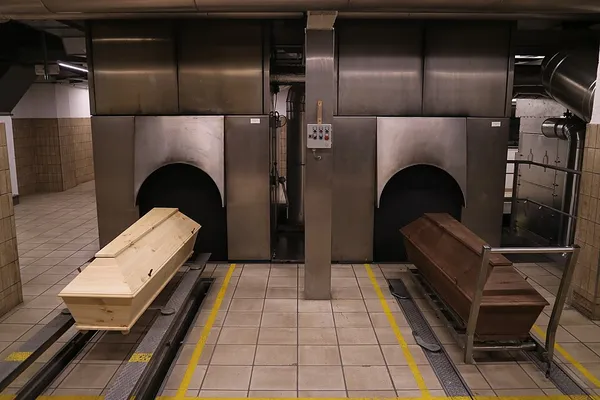
Cremation is a method of final disposition of a corpse or animal carcass through burning. Cremation may serve as a funeral or post-funeral rite and as an alternative to burial. In some countries, including India and Nepal, cremation on an open-air pyre is an ancient tradition. Starting in the 19th century, cremation was introduced or reintroduced into other parts of the world. In modern times, cremation is commonly carried out with a closed furnace (cremator), at a crematorium. Human cremation leaves behind an average of 2.4 kg (5.3 lb) of remains known as ashes or cremains. This is not all ash but includes unburnt fragments of bone mineral, which are commonly ground into powder. They are inorganic and inert, and thus do not constitute a health risk and may be buried, interred in a memorial site, retained by relatives or scattered in various ways.
Also on this shelf
Humphry Davy.
Air ioniser.
See also
Uncatalogued shelfText from Wikipedia; plate via Wikimedia Commons. Text CC BY-SA 4.0; plate freely licensed (see Commons). Source record. Images and catalogue data are reproduced from open-access collections.