Science and Medicine
Coxiella burnetii
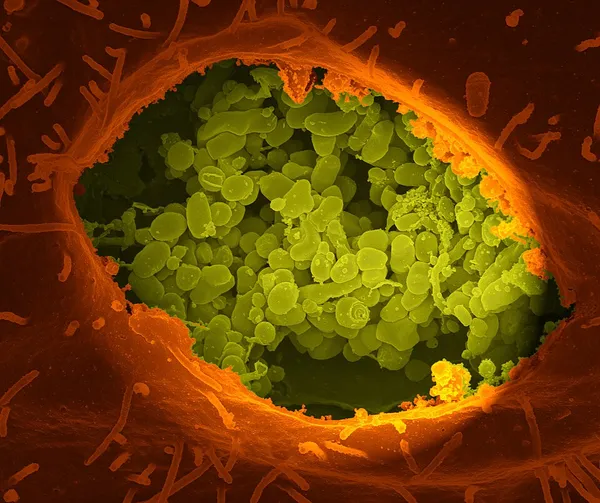
Coxiella burnetii is a gram-negative, obligate intracellular bacterial pathogen (a type of bacterium that lives inside the cells of its host) and the causative agent of Q fever. Although it was historically grouped with Rickettsia because of similar cell morphology, genetic and physiological studies show that C. burnetii is distinct and belongs to the class Gammaproteobacteria, and it is currently the only confirmed species within the genus Coxiella. The bacterium is a small coccobacillus with a unique ability to survive in extremely harsh environmental conditions. It forms a highly resistant small-cell variant (SCV) as part of a two-stage developmental cycle, which alternates with a metabolically active large-cell variant (LCV) that replicates inside host cells. These adaptations allow C. burnetii to survive common disinfectants and to persist within host cells, including in harsh environments such as the acidic phagolysosome.
Also on this shelf
Jane S. Richardson.
Carriage of Passengers Act of 1855.
See also
Uncatalogued shelfText from Wikipedia; plate via Wikimedia Commons. Text CC BY-SA 4.0; plate freely licensed (see Commons). Source record. Images and catalogue data are reproduced from open-access collections.