Science and Medicine
Cutibacterium acnes
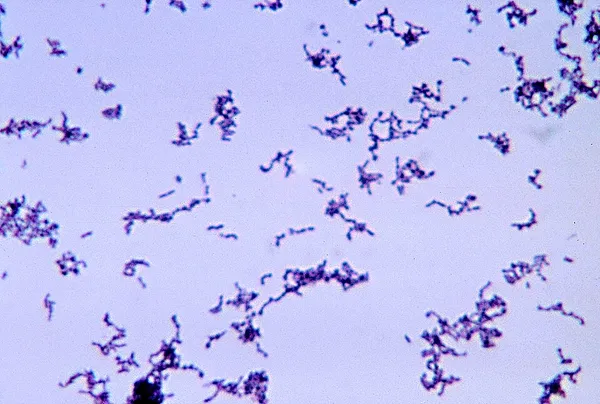
Cutibacterium acnes (Propionibacterium acnes) is the relatively slow-growing, typically aerotolerant anaerobic, gram-positive bacterium (rod) linked to the skin condition of acne; it can also cause chronic blepharitis and endophthalmitis, the latter particularly following intraocular surgery. Its genome has been sequenced and a study has shown several genes can generate enzymes for degrading skin and proteins that may be immunogenic (activating the immune system). The species is largely commensal and part of the skin flora present on most healthy adult humans' skin. It is usually just barely detectable on the skin of healthy preadolescents. It lives, among other things, primarily on fatty acids in sebum secreted by sebaceous glands in the follicles. It may also be found throughout the gastrointestinal tract. Originally identified as Bacillus acnes, it was later named Propionibacterium acnes for its ability to generate propionic acid. In 2016, P. acnes was taxonomically reclassified as a result of biochemical and genomic studies. In terms of both phylogenetic tree structure and DNA G + C content, the cutaneous species was distinguishable from other species that had been previously categorized as P. acnes. As part of restructuring, the novel genus Cutibacterium was created for the cutaneous species, including those formerly identified as Propionibacterium acnes, Propionibacterium avidum, and Propionibacterium granulosum. Characterization of phylotypes of C. acnes is an active field of research.
Also on this shelf
Hair transplantation.
Conjoined twins.
See also
Uncatalogued shelfText from Wikipedia; plate via Wikimedia Commons. Text CC BY-SA 4.0; plate freely licensed (see Commons). Source record. Images and catalogue data are reproduced from open-access collections.