Science and Medicine
History of cataract surgery
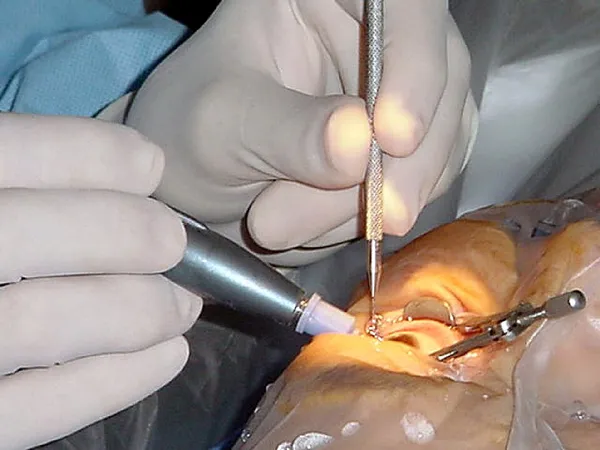
Cataract surgery has a long history in Europe, Asia, and Africa. It is one of the most common and successful surgical procedures in worldwide use, thanks to improvements in techniques for cataract removal and developments in intraocular lens (IOL) replacement technology, in implantation techniques, and in IOL design, construction, and selection. Surgical techniques that have contributed to this success include microsurgery, viscoelastics, and phacoemulsification. Cataract surgery is the removal of the natural lens of the eye that has developed a cataract, an opaque or cloudy area. Over time, metabolic changes of the crystalline lens fibres lead to the development of a cataract, causing impairment or loss of vision. Some infants are born with congenital cataracts, and environmental factors may lead to cataract formation. Early symptoms may include strong glare from lights and small light sources at night and reduced visual acuity at low light levels. Couching (lens depression) was the original form of cataract surgery and was used from antiquity. Chrysippus of Soli, a stoic Greek philosopher, provided the earliest account of it. Couching is still occasionally found in traditional medicine in parts of Africa and Asia. In 1753, Samuel Sharp performed the first-recorded surgical removal of the entire lens and lens capsule, equivalent to what became known as intracapsular cataract extraction. The lens was removed from the eye through a limbal incision. At the beginning of the 20th century, the standard surgical procedure was intracapsular cataract extraction (ICCE). In 1949, Harold Ridley introduced the concept of implantation of the intraocular lens (IOL), which made visual rehabilitation after cataract surgery a more efficient, effective, and comfortable process. In 1967, Charles Kelman introduced phacoemulsification, which uses ultrasonic energy to emulsify the nucleus of the crystalline lens and remove cataracts by aspiration without a large incision. This method of surgery reduced the need for an extended hospital stay and made out-patient surgery the standard. In 1985, Thomas Mazzocco developed and implanted the first foldable IOL. Graham Barrett and associates pioneered the use of silicone, acrylic, and hydrogel foldable lenses, making it possible to reduce the incision width.
Also on this shelf
2015–16 Zika virus epidemic.
Gastrointestinal stromal tumor.
See also
Uncatalogued shelfText from Wikipedia; plate via Wikimedia Commons. Text CC BY-SA 4.0; plate freely licensed (see Commons). Source record. Images and catalogue data are reproduced from open-access collections.