Science and Medicine
Charles Louis Alphonse Laveran
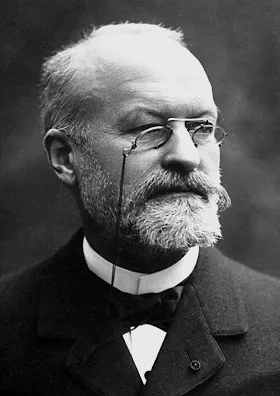
Charles Louis Alphonse Laveran (18 June 1845 – 18 May 1922) was a French physician who won the Nobel Prize in Physiology or Medicine in 1907 for his discoveries of parasitic protozoans as causative agents of infectious diseases such as malaria and trypanosomiasis. Following his father, Louis Théodore Laveran, he took up military medicine as his profession. He obtained his medical degree from University of Strasbourg in 1867. At the outbreak of the Franco-Prussian War in 1870, he joined the French Army. At the age of 29 he became Chair of Military Diseases and Epidemics at the École de Val-de-Grâce. At the end of his tenure in 1878 he worked in Algeria, where he made his major achievements. He discovered that the protozoan parasite Plasmodium was responsible for malaria, and that Trypanosoma caused trypanosomiasis or African sleeping sickness. In 1894 he returned to France to serve in various military health services. In 1896 he joined Pasteur Institute as Chief of the Honorary Service, from where he received the Nobel Prize. He donated half of his Nobel prize money to establish the Laboratory of Tropical Medicine at the Pasteur Institute. In 1908, he founded the Société de Pathologie Exotique. Laveran was elected to French Academy of Sciences in 1893, and was conferred Commander of the National Order of the Legion of Honour in 1912.
Also on this shelf
Christiaan Huygens.
Gideon Mantell.
See also
Uncatalogued shelfText from Wikipedia; plate via Wikimedia Commons. Text CC BY-SA 4.0; plate freely licensed (see Commons). Source record. Images and catalogue data are reproduced from open-access collections.