Science and Medicine
Colonial history of the United States
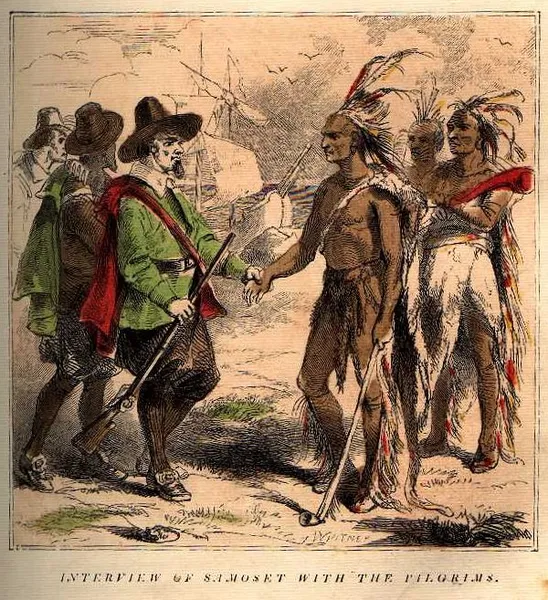
The colonial history of the United States covers the period of European colonization of North America from the early 17th century until the unifying of thirteen British colonies and creation of the United States in 1776, during the American War of Independence. Native Americans lived in the territory of North America prior to European colonization and were present throughout the colonial era. The Spanish were the first Europeans to establish a permanent settlement in what became the United States, at Saint Augustine, Florida (1565). Although Spain claimed sovereignty over all North America, its main interest was central Mexico with dense, hierarchically organized indigenous populations, who rendered tribute and labor to overlords, and newly discovered deposits of precious metals. Those resources made Spain wealthy. In the late sixteenth century, other European powers including England, France, and the Dutch Republic sought to replicate Spain's colonial success and launched colonization expeditions in North America in territory that Spain claimed but had not colonized. English settlers in the Thirteen Colonies on the Atlantic seaboard came from a variety of social and religious groups, including adventurers, farmers, indentured servants, tradesmen, and a very few from the aristocracy. Settlers included the Dutch of New Netherland, the Swedes and Finns of New Sweden, the English Quakers of the Province of Pennsylvania, the English Puritans of New England, the Virginian Cavaliers, the English Catholics and Protestant Nonconformists of the Province of Maryland, the "worthy poor" of the Province of Georgia, the Germans who settled the mid-Atlantic colonies, and the Ulster Scots of the Appalachian Mountains. These groups all became part of the United States when it gained its independence in 1783. Parts of what had been New France were incorporated during the American Revolution and soon after. Parts of New Spain were incorporated in several stages, and Russian America was also incorporated into the United States at a later time. The diverse colonists from these various regions built colonies of distinctive social, religious, political, and economic style. Over time, non-British colonies East of the Mississippi River were taken over and most of the inhabitants were assimilated.
Also on this shelf
Google Glass.
Einiosaurus.
See also
Uncatalogued shelfText from Wikipedia; plate via Wikimedia Commons. Text CC BY-SA 4.0; plate freely licensed (see Commons). Source record. Images and catalogue data are reproduced from open-access collections.