Science and Medicine
Grimace scale
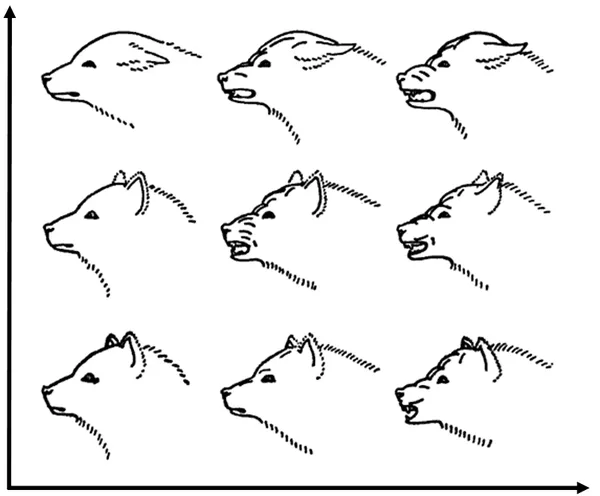
The grimace scale (GS), sometimes called the grimace score, is a method of assessing the occurrence or severity of pain experienced by non-human animals according to objective and blinded scoring of facial expressions, as is done routinely for the measurement of pain in non-verbal humans. Observers score the presence or prominence of "facial action units" (FAU), e.g. Orbital Tightening, Nose Bulge, Ear Position and Whisker Change. These are scored by observing the animal directly in real-time, or post hoc from photographs or screen-grabs from videos. The facial expression of the animals is sometimes referred to as the pain face. The GS method of pain assessment is highly applicable to laboratory rodents as these are usually prey species which tend to inhibit the expression of pain to prevent appearing vulnerable to predators. For this reason, behavioural changes in these species are mainly observed with acute pain (hours) but are less pronounced in longer-lasting pain (days). For mice at least, the GS has been shown to be a highly accurate, repeatable and reliable means of assessing pain requiring only a short period of training for the observer. Across species, GS are proven to have high accuracy and reliability, and are considered useful for indicating both procedural and postoperative pain, and for assessing the efficacy of analgesics. The overall accuracy of GS is reported as 97% for mice, 84% for rabbits, 82% for rats and 73.3% for horses.
Also on this shelf
Insulin.
Bird of prey.
See also
Uncatalogued shelfText from Wikipedia; plate via Wikimedia Commons. Text CC BY-SA 4.0; plate freely licensed (see Commons). Source record. Images and catalogue data are reproduced from open-access collections.