Science and Medicine
Depleted uranium
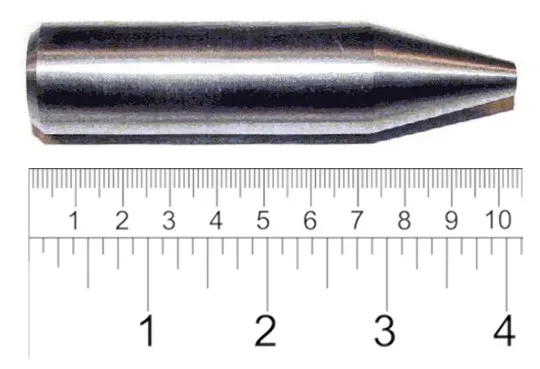
Depleted uranium (DU), also referred to in the past as Q-metal, depletalloy, or D-38, is uranium with a lower content of the fissile isotope 235U than natural uranium. The less radioactive and non-fissile 238U is the main component of depleted uranium. It is antonymous to "enriched uranium". Uranium is notable for the extremely high density of its metallic form: at 19.1 grams per cubic centimetre (0.69 lb/cu in), uranium is 68.4% more dense than lead. Because depleted uranium has nearly the same density as natural uranium but far less radioactivity, it is desirable for applications that demand high mass without added radiation hazards. Civilian uses include counterweights in aircraft, radiation shielding in medical radiation therapy, research and industrial radiography equipment, and containers for transporting radioactive materials. Military uses include armor plating and armor-piercing projectiles. The use of DU in ammunitions is controversial because of concerns about potential long-term health effects. Normal functioning of the kidney, brain, liver, heart, and numerous other systems can be affected by exposure to uranium, a toxic metal. It is only weakly radioactive because of the long radioactive half-life of 238U (4.468 billion years) and the low amounts of 234U (half-life about 246,000 years) and 235U (half-life 700 million years). The biological half-life (the average time it takes for the human body to eliminate half the amount in the body) for uranium is about 15 days. The aerosol or spallation frangible powder produced by impact and combustion of depleted uranium munitions (or armour) can potentially contaminate wide areas around the impact sites, leading to possible inhalation by human beings. The actual level of acute and chronic toxicity of DU is also controversial. Several studies using cultured cells and laboratory rodents suggest the possibility of leukemogenic, genetic, reproductive, and neurological effects from chronic exposure. A 2005 epidemiology review concluded "In aggregate the human epidemiological evidence is consistent with increased risk of birth defects in offspring of persons exposed to DU." A 2021 study concluded that DU from exploding munitions did not lead to Gulf War illness in American veterans deployed in the Gulf War.
Also on this shelf
History of phagocytosis.
Ernst Haeckel.
See also
Uncatalogued shelfText from Wikipedia; plate via Wikimedia Commons. Text CC BY-SA 4.0; plate freely licensed (see Commons). Source record. Images and catalogue data are reproduced from open-access collections.