Science and Medicine
Cholera
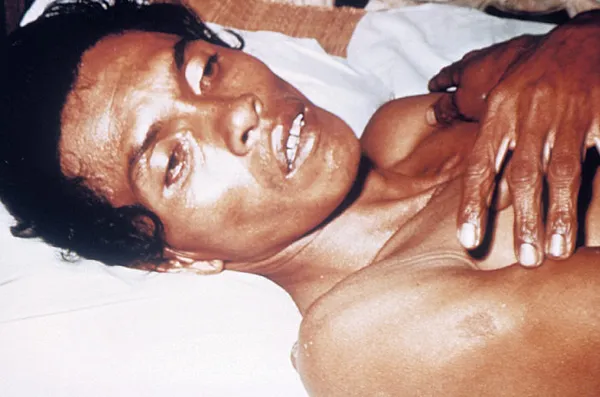
Cholera () is an infection of the small intestine by some strains of the bacterium Vibrio cholerae. Symptoms may range from none, to mild, to severe. The classic symptom is large amounts of watery diarrhea lasting a few days. Vomiting and muscle cramps may also occur. Diarrhea can be so severe that it leads within hours to severe dehydration and electrolyte imbalance. This can in turn result in sunken eyes, cold or cyanotic skin, decreased skin elasticity, wrinkling of the hands and feet, and, in severe cases, death. Symptoms start two hours to five days after exposure. Cholera is caused by a number of types of Vibrio cholerae, with some types producing more severe disease than others. It is spread mostly by unsafe water and unsafe food that has been contaminated with human feces containing the bacteria. Undercooked shellfish is a common source. Humans are the only known host for the bacteria. Risk factors for the disease include poor sanitation, insufficient clean drinking water, and poverty. Cholera can be diagnosed by a stool test, or a rapid dipstick test, although the dipstick test is less accurate. Prevention methods against cholera include improved sanitation and access to clean water. Cholera vaccines that are given by mouth provide reasonable protection for about six months, and confer the added benefit of protecting against another type of diarrhea caused by E. coli. In 2017, the US Food and Drug Administration (FDA) approved a single-dose, live, oral cholera vaccine called Vaxchora for adults aged 18–64 who are travelling to an area of active cholera transmission. It offers limited protection to young children. People who survive an episode of cholera have long-lasting immunity for at least three years (the period tested). The primary treatment for affected individuals is oral rehydration salts (ORS), the replacement of fluids and electrolytes by using slightly sweet and salty solutions. Rice-based solutions are preferred. In children, zinc supplementation has also been found to improve outcomes. In severe cases, intravenous fluids, such as Ringer's lactate, may be required, and antibiotics may be beneficial. The choice of antibiotic is aided by antibiotic sensitivity testing. Cholera continues to affect an estimated 3–5 million people worldwide and causes 28,800–130,000 deaths a year.
Also on this shelf
Drug crisis in Scotland.
Health in Cambodia.
See also
Uncatalogued shelfText from Wikipedia; plate via Wikimedia Commons. Text CC BY-SA 4.0; plate freely licensed (see Commons). Source record. Images and catalogue data are reproduced from open-access collections.