Science and Medicine
Birth control movement in the United States
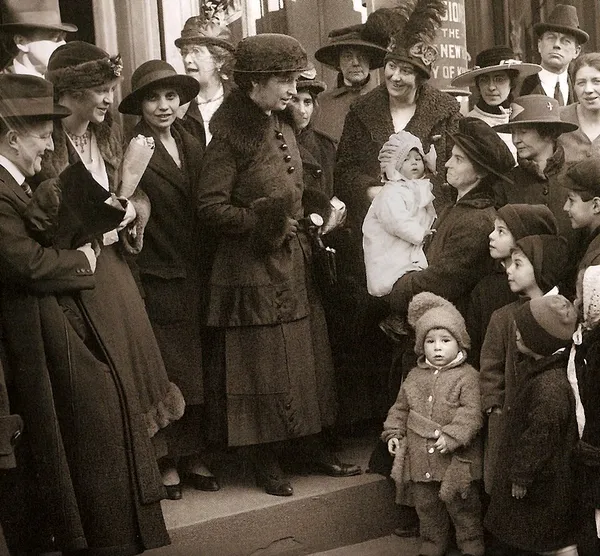
The birth control movement in the United States was a social reform campaign beginning in 1914 that aimed to increase the availability of contraception in the U.S. through education and legalization. The movement began in 1914 when a group of political radicals in New York City, led by Emma Goldman, Mary Dennett, and Margaret Sanger, became concerned about the hardships that childbirth and self-induced abortions brought to low-income women. Since contraception was considered to be obscene at the time, the activists targeted the Comstock laws, which prohibited distribution of any "obscene, lewd, and/or lascivious" materials through the mail. Hoping to provoke a favorable legal decision, Sanger deliberately broke the law by distributing The Woman Rebel, a newsletter containing a discussion of contraception. In 1916, Sanger opened the first birth control clinic in the United States, but the clinic was immediately shut down by police, and Sanger was sentenced to 30 days in jail. A major turning point for the movement came during World War I, when many U.S. servicemen were diagnosed with venereal diseases. The government's response included an anti-venereal disease campaign that framed sexual intercourse and contraception as issues of public health and legitimate topics of scientific research. This was the first time a U.S. government institution had engaged in a sustained, public discussion of sexual matters; as a consequence, contraception transformed from an issue of morals to an issue of public health. Encouraged by the public's changing attitudes towards birth control, Sanger opened a second birth control clinic in 1923, but this time there were no arrests or controversy. Throughout the 1920s, public discussion of contraception became more commonplace, and the term "birth control" became firmly established in the nation's vernacular. The widespread availability of contraception signaled a transition from the stricter sexual mores of the Victorian era to a more sexually permissive society. Legal victories in the 1930s continued to weaken anti-contraception laws.
Also on this shelf
Algorithmic bias.
Francis Collins.
See also
Uncatalogued shelfText from Wikipedia; plate via Wikimedia Commons. Text CC BY-SA 4.0; plate freely licensed (see Commons). Source record. Images and catalogue data are reproduced from open-access collections.