Science and Medicine
Bushmeat
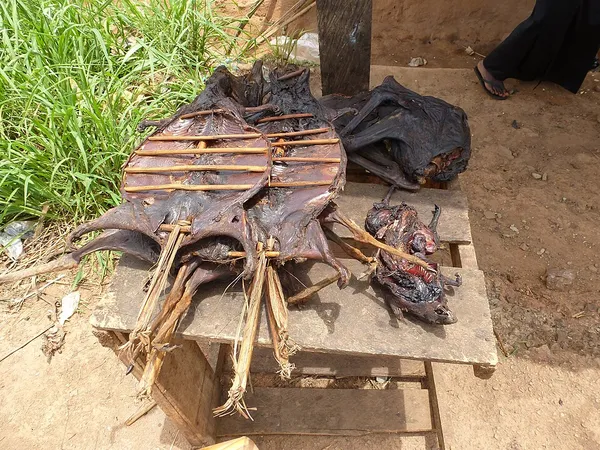
Bushmeat is meat from wildlife hunted for human consumption, particularly in Africa. Bushmeat often consists of local mammals in an area, but can also refer to small birds and reptiles. As of 2016, 301 terrestrial mammals were threatened with extinction due to hunting for bushmeat including non-human primates, even-toed ungulates, bats, diprotodont marsupials, rodents and carnivores occurring in developing countries. Bushmeat is also a significant public health concern due to its association with zoonotic disease transmission. Bushmeat represents a primary source of animal protein and a source of income in poor and rural communities of humid tropical forest regions of the world. Typically, bushmeat trade cooccurs with other environmental exploitation issues, such as logging, or land degradation. Experts often study bushmeat use as a symptom of larger sustainable development issues, in frameworks like One Health that combine the environmental impact of bushmeat with the health impacts on communities. In a public health context, bushmeat is of concern due to its association with the transmission of zoonotic diseases such as Ebola and HIV, as well as other emerging infectious diseases linked to the handling, butchering, and consumption of wild animals. Strategies for reducing the trade in bushmeat in include public health education, improving the productivity of small holder farmers to produce alternative proteins, and greater regulation of the wildlife trade and protection of conservation areas.
Also on this shelf
Alimuddin Zumla.
Charity Hospital (New Orleans).
See also
- ▸2009 swine flu pandemic in Asia
- ▸Coventry
- ▸COVID-19 cluster infection incident at Taiwan Taoyuan International Airport
Text from Wikipedia; plate via Wikimedia Commons. Text CC BY-SA 4.0; plate freely licensed (see Commons). Source record. Images and catalogue data are reproduced from open-access collections.