Science and Medicine
Cat-scratch disease
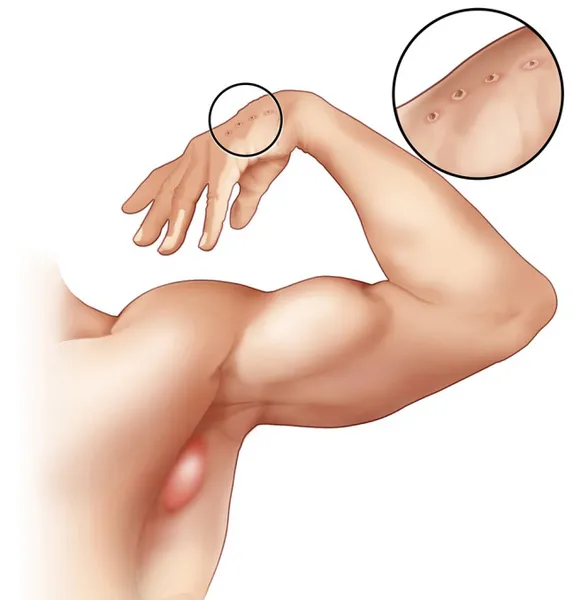
Cat-scratch disease (CSD) is an infectious disease that most often results from a scratch or bite of a cat. Symptoms typically include a non-painful bump or blister at the site of injury and painful and swollen lymph nodes. People may feel tired, have a headache, or a fever. Symptoms typically begin within 3–14 days following infection. Cat-scratch disease is caused by the bacterium Bartonella henselae, which is believed to be spread by the cat's saliva. Young cats pose a greater risk than older cats. The disease can be passed to a human from dog scratches or bites, but this is relatively rare. Diagnosis is generally based on symptoms. Confirmation is possible by blood tests. The primary treatment is supportive. Antibiotics speed healing and are recommended in those with severe disease or immune system problems. Recovery typically occurs within 4 months but can require a year. CSD affects approximately 1 in 10,000 people. It is more common in children.
Also on this shelf
Canning Town.
Friedrich Graetz.
See also
- ▸Andrea Cesalpino
- ▸Christmas Island flying fox
- ▸Gamaleya Research Institute of Epidemiology and Microbiology
Text from Wikipedia; plate via Wikimedia Commons. Text CC BY-SA 4.0; plate freely licensed (see Commons). Source record. Images and catalogue data are reproduced from open-access collections.