Science and Medicine
1881–1896 cholera pandemic
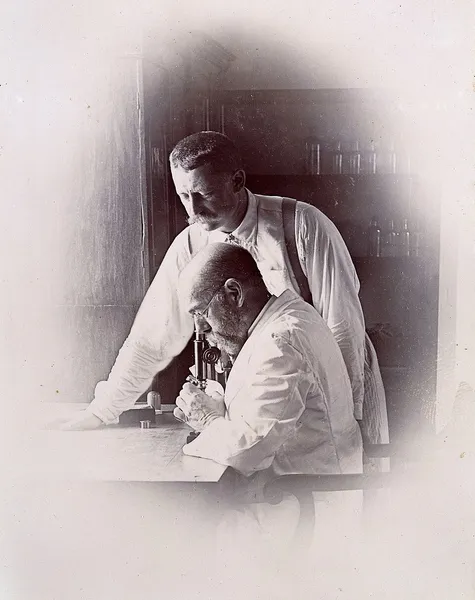
The fifth cholera pandemic (1881–1896) was the fifth major international outbreak of cholera in the 19th century. The endemic origin of the pandemic, as with those of its predecessors, was in the Ganges Delta in West Bengal. While the Vibrio cholerae bacteria had not been able to spread to western Europe until the 19th century, faster and improved modes of modern transportation, such as steamships and railways, reduced the duration of the journey considerably and facilitated the transmission of cholera and other infectious diseases. During the fourth 1863–1875 cholera pandemic, the third International Sanitary Conference convened in 1866 in Constantinople had identified religious pilgrimages to be "the most powerful of all causes" of cholera and again Hindu and Muslim pilgrimages were an important factor in the spread of the disease. In addition, the growing colonial rule of the British in India, and France's colonial war in Indo-China, with its increased military presence and economic exchanges multiplied the connections both inside Asia and between Asia and Europe. Therefore, cholera for the first time could spread significantly outside its original source habitat on the Indian subcontinent, where it had been home for centuries. The fifth cholera pandemic would be known in Europe as the 'eastern plague'. A better insight in the disease and improved sanitation limited mortality largely in Europe and North America, although some substantial outbreaks in Europe did happen. During this pandemic, there were significant scientific advances that improved the control of the disease. German microbiologist Robert Koch isolated Vibrio cholerae and proposed postulates to explain how bacteria caused disease. His work helped to establish the germ theory of disease. In 1892, the Russian-French bacteriologist Waldemar Haffkine, developed a cholera vaccine. (See: Scientific advances)
Also on this shelf
Control of Communicable Diseases Manual.
Dean Conant Worcester.
See also
Uncatalogued shelfText from Wikipedia; plate via Wikimedia Commons. Text CC BY-SA 4.0; plate freely licensed (see Commons). Source record. Images and catalogue data are reproduced from open-access collections.