Science and Medicine
Choking
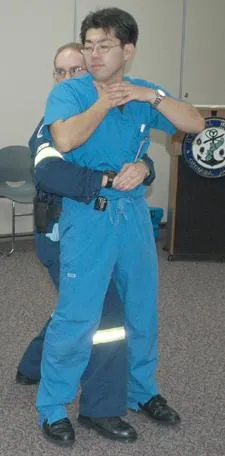
Choking, also known as foreign body airway obstruction (FBAO), is a phenomenon that occurs when breathing is impeded by a blockage inside of the respiratory tract. An obstruction that prevents oxygen from entering the lungs results in oxygen deprivation. Although oxygen stored in the blood and lungs can keep a person alive for several minutes after breathing stops, choking often leads to death. Around 4,500 to 5,000 choking-related deaths occur in the United States every year. Deaths from choking most often occur in the very young (children under three years old) and in the elderly (adults over 75 years). Foods that can adapt their shape to that of the pharynx (such as bananas, marshmallows, or gelatinous candies) are more dangerous. Various forms of specific first aid are used to address and resolve choking. Choking is the fourth leading cause of unintentional injury death in the United States. Many episodes go unreported because they are brief and resolve without needing medical attention. Of the reported events, 80% occur in people under 15 years of age, and 20% occur in people older than 15 years of age. Worldwide, choking on a foreign object resulted in 162,000 deaths (2.5 per 100,000) in 2013, compared with 140,000 deaths (2.9 per 100,000) in 1990.
Also on this shelf
Bridgewater Treatises.
BDSM.
See also
Uncatalogued shelfText from Wikipedia; plate via Wikimedia Commons. Text CC BY-SA 4.0; plate freely licensed (see Commons). Source record. Images and catalogue data are reproduced from open-access collections.