Science and Medicine
Charles Scott Sherrington
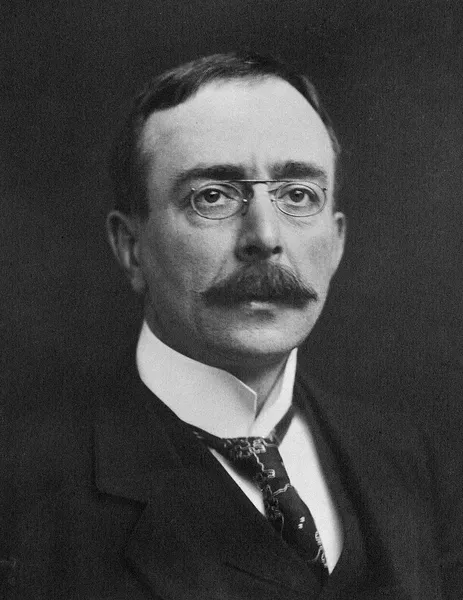
Sir Charles Scott Sherrington (27 November 1857 – 4 March 1952) was a British neurophysiologist and academic. His experimental research established many aspects of contemporary neuroscience, including the concept of the spinal reflex as a system involving connected neurons (the "neuron doctrine"), and how signal transmission between neurons can be potentiated or depotentiated. Sherrington himself coined the word "synapse" to define the connection between two neurons. His book The Integrative Action of the Nervous System (1906) is a synthesis of this work, in recognition of which he was awarded the Nobel Prize in Physiology or Medicine in 1932 (along with Edgar Adrian). In addition to his work in physiology, Sherrington did research in histology, bacteriology, and pathology. He was president of the Royal Society in the early 1920s.
Also on this shelf
Global Health Security Agenda.
Bibliography of biology.
See also
Uncatalogued shelfText from Wikipedia; plate via Wikimedia Commons. Text CC BY-SA 4.0; plate freely licensed (see Commons). Source record. Images and catalogue data are reproduced from open-access collections.