Science and Medicine
Epidemiology of diabetes
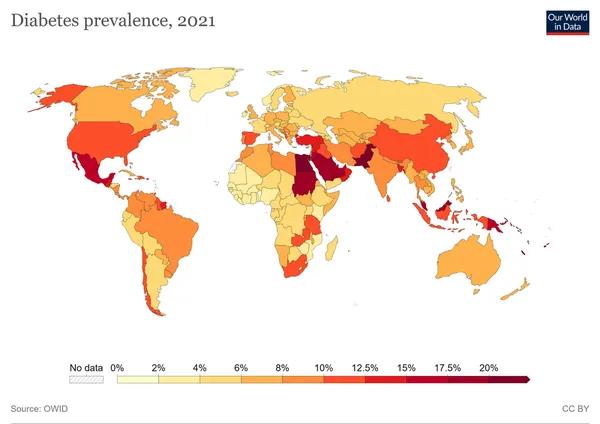
Globally, an estimated 537 million adults are living with diabetes, according to 2021 data from the International Diabetes Federation. Diabetes was the 9th-leading cause of mortality globally in 2020, attributing to over 2 million deaths annually due to diabetes directly, and to kidney disease due to diabetes. The primary causes of type 2 diabetes is diet and physical activity, which can contribute to increased BMI, poor nutrition, hypertension, alcohol use and smoking, while genetics is also a factor. Diabetes prevalence is increasing rapidly; previous 2019 estimates put the number at 463 million people living with diabetes, with the distributions being equal between both sexes incidence peaking around age 55 years old. The number is projected to 643 million by 2030, or 7079 individuals per 100,000, with all regions around the world continue to rise. Type 2 diabetes makes up about 85-90% of all cases. Increases in the overall diabetes prevalence rates largely reflect an increase in risk factors for type 2, notably greater longevity and being overweight or obese. The prevalence of African Americans with diabetes is estimated to triple by 2050, while the prevalence of white Americans is estimated to double. The overall prevalence increases with age, with the largest increase in people over 65 years of age. The prevalence of diabetes in America is estimated to increase to 48.3 million by 2050. Diabetes mellitus occurs throughout the world, but is more common (especially type 2) in the more developed countries. The greatest increase in prevalence is, however, occurring in low- and middle-income countries including in Asia and Africa, where most patients will probably be found by 2030. The increase in incidence in developing countries follows the trend of urbanization and lifestyle changes, including increasingly sedentary lifestyles, less physically demanding work and the global nutrition transition, marked by increased intake of foods that are high energy-dense but nutrient-poor (often high in sugar and saturated fats, sometimes referred to as the Western pattern diet). The risk of getting type 2 diabetes has been widely found to be associated with lower socio-economic position across countries. The WHO estimates that diabetes resulted in 1.5 million deaths in 2012, making it the 8th leading cause of death.
Also on this shelf
2011 Germany E. coli O104:H4 outbreak.
Childbirth.
See also
Uncatalogued shelfText from Wikipedia; plate via Wikimedia Commons. Text CC BY-SA 4.0; plate freely licensed (see Commons). Source record. Images and catalogue data are reproduced from open-access collections.