Science and Medicine
Endometriosis
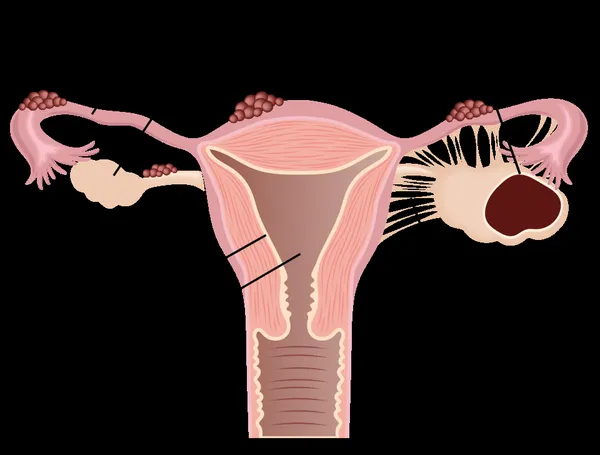
Endometriosis is a disease in which tissue similar to the endometrium—the lining of the uterus (womb)—grows elsewhere in the body. The tissue most often grows close to the uterus, such as on the ovaries, fallopian tubes, or the lining of the pelvis. It can also appear on the bowel, bladder, and in some cases on the lungs or skin. Worldwide, endometriosis affects approximately 10% of the female population of reproductive age, representing nearly 200 million women. Symptoms typically begin in adolescence or the early 20s, and tend to improve after menopause as estrogen levels go down. Symptoms vary widely between individuals. Some have no symptoms, while for others it is a debilitating disease. Common symptoms include pelvic pain, heavy and painful periods, pain with bowel movements, painful urination, painful sex, fatigue, and infertility. Beyond bodily symptoms, endometriosis can affect a person's mental health and social life. It is not known exactly what causes the disease. Possible causes include backward (retrograde) flow of menstrual fluid, genetic factors, hormones, and problems with the immune system. A presumed diagnosis can be made based on symptoms and medical imaging; laparoscopy (keyhole surgery) with a biopsy can provide definite confirmation. Other causes of similar symptoms include adenomyosis, uterine fibroids (both of these are conditions that affect the uterus), irritable bowel syndrome, and bladder pain syndrome. On average, it takes 5–12 years from the start of symptoms to receive a diagnosis. Many women report being incorrectly told their symptoms are trivial or normal. While there is no cure for endometriosis, several treatments can improve symptoms. These include hormonal treatments, pain medication, and surgery. First-line treatments usually consist of hormonal treatment—such as a hormonal IUD (coil) or continuous use of a birth control pill—combined with a non-steroidal anti-inflammatory drug (NSAID) such as naproxen. Other hormonal treatment may be tried if these are not effective. Most individuals benefit from drug treatment, though this approach may lose effectiveness over time. Lesions (patches of endometriosis) may be removed surgically in women whose symptoms are not relieved by other treatments, or when endometriosis is associated with infertility.
Also on this shelf
Diseases Prevention (Metropolis) Act 1883.
CureVac COVID-19 vaccine.
See also
Uncatalogued shelfText from Wikipedia; plate via Wikimedia Commons. Text CC BY-SA 4.0; plate freely licensed (see Commons). Source record. Images and catalogue data are reproduced from open-access collections.