Science and Medicine
2016 Angola and DR Congo yellow fever outbreak
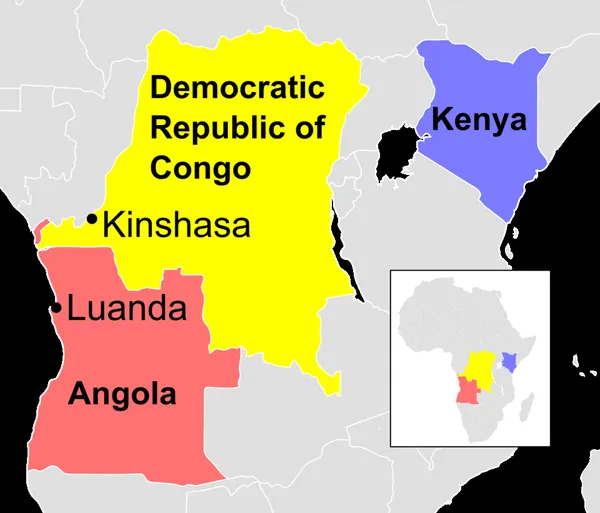
On 20 January 2016, the health minister of Angola reported 23 cases of yellow fever with 7 deaths among Eritrean and Congolese citizens living in Angola in Viana municipality, a suburb of the capital of Luanda. The first cases (hemorrhagic fever suspected as being yellow fever) were reported in Eritrean visitors beginning on 5 December 2015 and confirmed by the Pasteur WHO reference laboratory in Dakar, Senegal in January. The outbreak was classified as an urban cycle of yellow fever transmission, which can spread rapidly. A preliminary finding that the strain of the yellow fever virus was closely related to a strain identified in a 1971 outbreak in Angola was confirmed in August 2016. Moderators from ProMED-mail stressed the importance of initiating a vaccination campaign immediately to prevent further spread. The CDC classified the outbreak as Watch Level 2 (Practice Enhanced Precautions) on 7 April 2016. The WHO declared it a grade 2 event on its emergency response framework having moderate public health consequences. At an emergency committee meeting in Geneva, Switzerland on 19 May 2016, the WHO declared that the outbreak was serious and might continue to spread, but decided not to declare a public health emergency of international concern (PHEIC). On 30 May, Margaret Chan, director-general of WHO published a commentary on the bold action needed to prevent further spread of this important communicable disease that caused many historically significant epidemics that took many lives in previous centuries. On 8 June the International Federation of Red Cross and Red Crescent Societies called for a scale-up in the response because of the lack of vaccine and other limitations amid the continuing spread of the outbreak. On 12 August 2016, Daniel R. Lucey, a ProMED mail consultant, wrote an open letter to Dr. Chan requesting that the WHO emergency committee be reconvened to consider a PHEIC because of the continued spread of the disease in Democratic Republic of the Congo, the lack of sufficient vaccine, and concern that it may be spreading into the Republic of the Congo. On 31 August, the decision to not declare a PHEIC was re-confirmed. By 2 September 2016, WHO announced there had been no new cases in either Angola or DR Congo in over a month due to a massive vaccination campaign.
Also on this shelf
Geriatrics.
Conspiracy theory.
See also
Uncatalogued shelfText from Wikipedia; plate via Wikimedia Commons. Text CC BY-SA 4.0; plate freely licensed (see Commons). Source record. Images and catalogue data are reproduced from open-access collections.