Science and Medicine
2009 swine flu pandemic
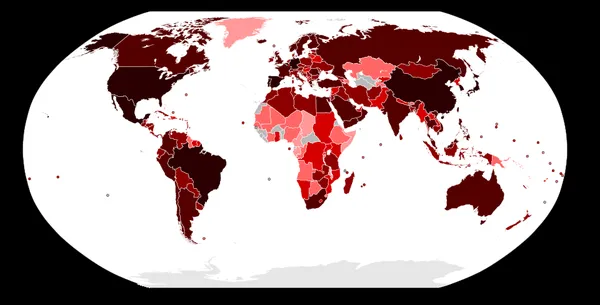
The 2009 swine flu pandemic, caused by the H1N1/swine flu/influenza virus and declared by the World Health Organization (WHO) from June 2009 to August 2010, was the third recent flu pandemic involving the H1N1 virus (the first being the 1918–1920 Spanish flu pandemic and the second being the 1977 Russian flu). The first identified human case was in La Gloria, Mexico, a rural town in Veracruz. The virus appeared to be a new strain of H1N1 that resulted from a previous triple reassortment of bird, swine, and human flu viruses which further combined with a Eurasian pig flu virus, leading to the term "swine flu". Unlike most strains of influenza, the pandemic H1N1/09 virus did not disproportionately infect adults older than 60 years; this was an unusual and characteristic feature of the H1N1 pandemic. Even in the case of previously healthy people, a small percentage develop pneumonia or acute respiratory distress syndrome (ARDS). This manifests itself as increased breathing difficulty and typically occurs three to six days after the initial onset of flu symptoms. The pneumonia caused by the flu can be either direct viral pneumonia or a secondary bacterial pneumonia. A November 2009 New England Journal of Medicine article recommended that flu patients whose chest X-ray indicates pneumonia receive both antivirals and antibiotics. In particular, it is a warning sign if a child seems to be getting better and then relapses with high fever, as this relapse may be bacterial pneumonia. Some studies estimated that the real number of cases including asymptomatic and mild cases could be 700 million to 1.4 billion people—or 11% to 21% of the global population of 6.8 billion at the time. The lower value of 700 million is more than the 500 million people estimated to have been infected by the Spanish flu pandemic. However, the Spanish flu infected approximately a third of the world population at the time, a much higher proportion. The number of lab-confirmed deaths reported to the WHO is 18,449 and is widely considered a gross underestimate. The WHO collaborated with the US Centers for Disease Control and Prevention (CDC) and the Netherlands Institute for Health Services Research (NIVEL) to produce two independent estimates of the influenza deaths that occurred during the global pandemic using two distinct methodologies.
Also on this shelf
Bill Cassidy.
1993 Four Corners hantavirus outbreak.
See also
Uncatalogued shelfText from Wikipedia; plate via Wikimedia Commons. Text CC BY-SA 4.0; plate freely licensed (see Commons). Source record. Images and catalogue data are reproduced from open-access collections.