Science and Medicine
Circumcision surgical procedure
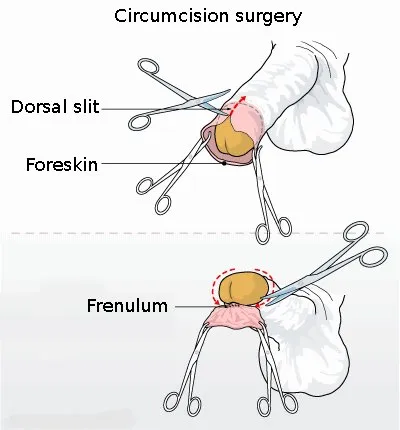
Circumcision surgical procedure in males involves either a "cut and stitch" surgical procedure or use of a circumcision instrument or device. In the newborn period (less than 2 months of age), almost all circumcisions are done by generalist practitioners using one of three surgical instruments. In the United States, the Gomco clamp is the most utilized instrument, followed by the Mogen clamp and the Plastibell. They are also used worldwide. In the 21st century, most circumcisions in boys and men are performed using one of three open surgical methods. The forceps-guided method, the dorsal slit method, and the sleeve resection method are well described by the World Health Organization in their Manual for Male Circumcision under Local Anaesthesia. The Gomco clamp and Mogen clamp are sometimes used after the newborn period, in conjunction with either surgical sutures or cyanoacrylate tissue adhesive to prevent post-operative bleeding. Circumcision surgical instruments should be distinguished from circumcision devices. Circumcision instruments are used at the time of surgery, and the circumcision is complete at the end of the procedure. The Gomco clamp, the Mogen clamp, and Unicirc are surgical instruments. Circumcision devices remain on the penis for 4 to 7 days and either spontaneously detach or are removed surgically at a subsequent visit. Plastibell, ShangRing, and other plastic rings are all circumcision devices, also known as "in situ" devices. Circumcision via instrument results in healing by primary intention and healing via devices is by secondary intention, so healing is delayed. All circumcision procedures should involve adequate injectable or topical anesthesia.
Also on this shelf
Communication of the Trump administration during the COVID-19 pandemic.
Hormonal intrauterine device.
See also
Uncatalogued shelfText from Wikipedia; plate via Wikimedia Commons. Text CC BY-SA 4.0; plate freely licensed (see Commons). Source record. Images and catalogue data are reproduced from open-access collections.