Science and Medicine
Dominican Republic
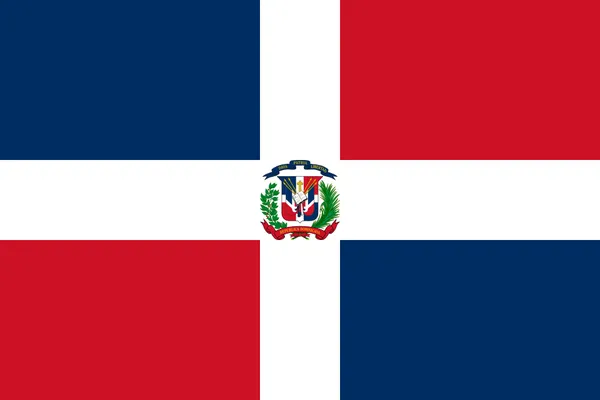
The Dominican Republic is an island country on the eastern part of the Caribbean island of Hispaniola in the Greater Antilles of the Caribbean Sea in the North Atlantic Ocean. It shares a maritime border with Puerto Rico to the east and a land border with Haiti to the west, occupying the eastern five-eighths of Hispaniola which, along with Saint Martin, is one of only two islands in the Caribbean shared by two sovereign states. In the Antilles, the country is the second-largest by area after Cuba at 48,671 square kilometers (18,792 sq mi) and the second most populous after Haiti with approximately 11.4 million people in 2024, of whom 3.6 million reside in the metropolitan area of Santo Domingo, the capital city. Indigenous peoples had inhabited Hispaniola prior to European contact, including the Taíno, who divided it into five chiefdoms. Christopher Columbus claimed the island for Castile, landing there on his first voyage in 1492. The colony of Santo Domingo became the site of the first permanent European settlement in the Americas. In 1697, Spain recognized French dominion over the western third of the island, which became the independent First Empire of Haiti in 1804. A group of Dominicans deposed the Spanish governor and declared independence from Spain in November 1821, but were annexed by Haiti in February 1822. Independence came 22 years later in 1844, after victory in the Dominican War of Independence. The next 72 years saw several civil wars, corrupt dictatorships, failed invasions by Haiti, and a brief return to Spanish colonial status, before permanently ousting the Spanish during the Dominican Restoration War of 1863–1865. The United States occupied the Dominican Republic from 1916 to 1924, followed by the dictatorship of Rafael Trujillo, ruling from 1930 until his assassination in 1961. Juan Bosch was elected president in 1962 but was deposed in a military coup in 1963. The Dominican Civil War of 1965 preceded a second American occupation and the authoritarian rule of Joaquín Balaguer (1966–1978 and 1986–1996). Since 1996, the Dominican Republic has moved towards representative democracy. The Dominican Republic has the largest economy in the Caribbean and the seventh-largest in Latin America. The country has had the fastest-growing economy in the Western Hemisphere – with an average real GDP growth rate of 5.3% between 1992 and 2018.
Also on this shelf
COVID-19 pandemic in South Asia.
Demographics of Thailand.
See also
Uncatalogued shelfText from Wikipedia; plate via Wikimedia Commons. Text CC BY-SA 4.0; plate freely licensed (see Commons). Source record. Images and catalogue data are reproduced from open-access collections.