Science and Medicine
Caesarean section
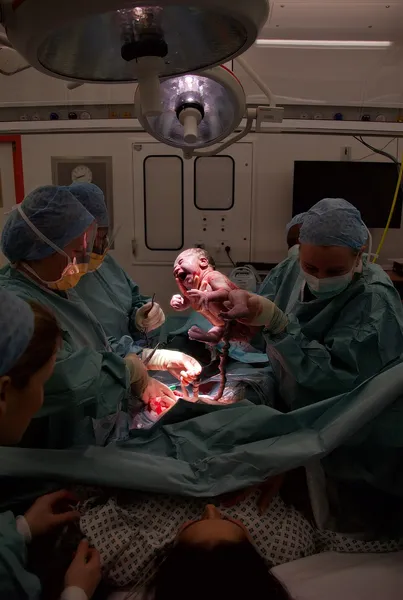
Caesarean section, also known as C-section, cesarean, or caesarean delivery, is the surgical procedure by which one or more babies are delivered through an incision in the mother's abdomen. It is often performed because vaginal delivery would put the mother or child at risk of injury or death. Reasons for the operation include, but are not limited to, obstructed labor, twin pregnancy, high blood pressure in the mother, breech birth, shoulder presentation, and problems with the placenta or umbilical cord. A caesarean delivery may be performed based upon the shape of the mother's pelvis or history of a previous C-section. A trial of vaginal birth after C-section may be possible. The World Health Organization recommends that caesarean section be performed only when medically necessary. A C-section typically takes between 45 minutes to an hour to complete. It may be done with a spinal block, where the woman is awake, or under general anesthesia. A urinary catheter is used to drain the bladder, and the skin of the abdomen is then cleaned with an antiseptic. An incision of about 15 cm (5.9 in) is then typically made through the mother's lower abdomen. The uterus is then opened with a second incision and the baby delivered. The incisions are then stitched closed. A woman can typically begin breastfeeding as soon as she is out of the operating room and awake. Often, several days are required in the hospital to recover sufficiently to return home. C-sections result in a small overall increase in poor outcomes in low-risk pregnancies. They also typically take about six weeks to heal, longer than vaginal birth. The increased risks include breathing problems in the baby and amniotic fluid embolism and postpartum bleeding in the mother. Established guidelines recommend that caesarean sections not be used before 39 weeks of pregnancy without a medical reason. The method of delivery does not appear to affect subsequent sexual function. In 2012, about 23 million C-sections were done globally. The international healthcare community has previously considered the rate of 10% and 15% ideal for caesarean sections. Some evidence finds that a higher rate of 19% may result in better outcomes. More than 45 countries globally have C-section rates less than 7.5%, while more than 50 have rates greater than 27%.
Also on this shelf
Alessandro Achillini.
Craniosacral therapy.
See also
Uncatalogued shelfText from Wikipedia; plate via Wikimedia Commons. Text CC BY-SA 4.0; plate freely licensed (see Commons). Source record. Images and catalogue data are reproduced from open-access collections.