Science and Medicine
Abu Bakr al-Razi
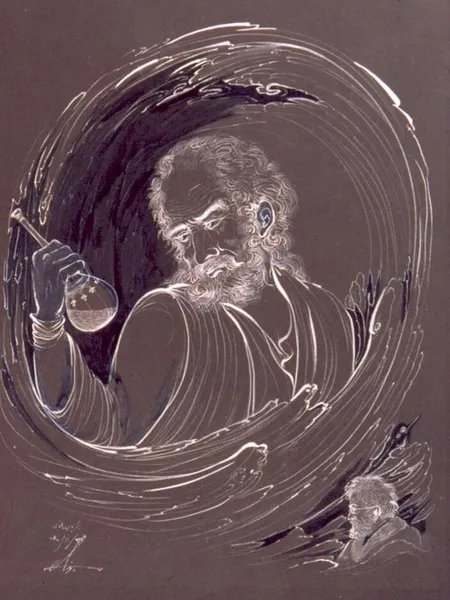
Abū Bakr al-Rāzī, also known as Rhazes (full name: أبو بکر محمد بن زکریاء الرازي, Abū Bakr Muḥammad ibn Zakariyyāʾ al-Rāzī, 864 or 865 – 925 or 935 CE), was a Persian Muslim physician, philosopher, alchemist, and pre-eminent medical writer of the Islamic Golden Age, widely regarded as one of the most important figures in the history of medicine. In addition to medicine and philosophy, he wrote on logic, astronomy, and grammar. Al-Rāzī studied medicine in Baghdad, where he spent much of his career, and became a successful physician who served as chief physician of hospitals in Baghdad and Ray. He was an early proponent of experimental medicine and made numerous medical advances through observation and discovery. As a teacher he attracted students of differing backgrounds and interests and was reputed to be compassionate and devoted to patients irrespective of whether they were rich or poor. Together with Thābit ibn Qurra (836–901), he was among the first physicians to distinguish clinically between smallpox and measles. He recognized the complexity of the causes of disease and the importance of the patient's own disposition or will in recovery, observing that this influence could be sufficiently strong for even charlatans sometimes to bring about apparent cures, while also acknowledging the limitations of physicians themselves. A prolific author, al-Rāzī is credited with more than 200 works or manuscripts. Among his major medical writings were Kitāb al-Manṣūrī, translated into Latin as Liber Almansoris, Kitāb al-Mulūkī (Liber Regius), and the extensive medical encyclopaedia Ḥāwī (Continens), which was completed by his pupils after his death. The latter was first translated into Latin in 1279 and subsequently became one of the early printed medical books, being printed five times between 1488 and 1542. Through Latin translation, his writings exerted a profound influence on medieval European medicine and medical education. Portions of Al-Manṣūrī, including sections on surgery and general therapeutics, entered the curricula of Western universities. Edward Granville Browne regarded him as "probably the greatest and most original of all the Muslim physicians, and one of the most prolific as an author".
Also on this shelf
2014 Democratic Republic of the Congo Ebola outbreak.
Apatosaurinae.
See also
Uncatalogued shelfText from Wikipedia; plate via Wikimedia Commons. Text CC BY-SA 4.0; plate freely licensed (see Commons). Source record. Images and catalogue data are reproduced from open-access collections.