Science and Medicine
Horse
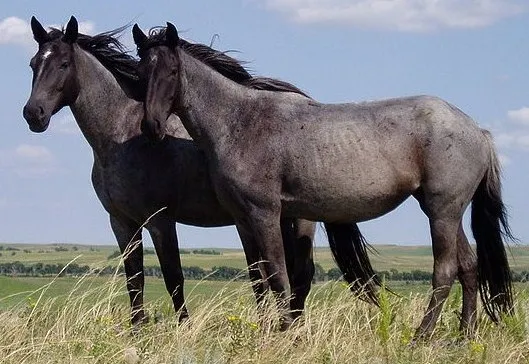
The horse (Equus ferus caballus) is a domesticated, one-toed, hoofed mammal. It belongs to the taxonomic family Equidae and is one of two extant subspecies of Equus ferus. The horse has evolved over the past 45 to 55 million years from a small multi-toed creature, Eohippus, into the large single-toed animal of today, originally in North America. Humans began domesticating horses around 4000 BCE in Central Asia, primarily associated with the Botai culture; their domestication is believed to have been widespread by 3000 BCE. However, contemporary genetic evidence indicates that modern domesticated breeds do not descend from this lineage, instead pointing to the Western Eurasian steppes in the lower Volga-Don region as the homeland of modern domestic horses. The modern horse breed replaced the local populations through their rapid expansion across Eurasia from 2000 BCE. Horses in the subspecies caballus are domesticated, although some domesticated populations live in the wild as feral horses. These feral populations are not true wild horses, which are horses that have never been domesticated. There is an extensive, specialized vocabulary used to describe equine-related concepts, covering everything from anatomy to life stages, size, colors, markings, breeds, locomotion, and behavior. Horses are adapted to run, allowing them to quickly escape predators, and possess a good sense of balance and a strong fight-or-flight response. Related to this ability to flee from predators in the wild is an unusual trait: horses are able to sleep both standing up and lying down, with younger horses tending to sleep significantly more than adults. Female horses, called mares, carry their young for approximately 11 months and a young horse, called a foal, can stand and run shortly following birth. Most domesticated horses begin training under a saddle or in a harness between the ages of two and four. They reach full adult development by age five, and have an average lifespan of between 25 and 30 years. Horse breeds are loosely divided into three categories based on general temperament: spirited "hot bloods" with speed and endurance; "cold bloods", such as draft horses and some ponies, suitable for slow, heavy work; and "warmbloods", developed from crosses between hot bloods and cold bloods, often focusing on creating breeds for specific riding purposes, particularly in Europe.
Also on this shelf
Cholera pit.
Hyperthermia.
See also
Uncatalogued shelfText from Wikipedia; plate via Wikimedia Commons. Text CC BY-SA 4.0; plate freely licensed (see Commons). Source record. Images and catalogue data are reproduced from open-access collections.