Science and Medicine
Hormonal intrauterine device
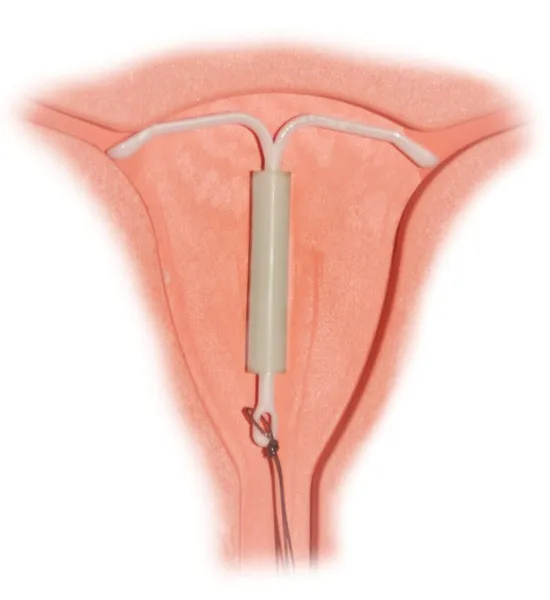
A hormonal intrauterine device (IUD), also known as an intrauterine system (IUS) with progestogen and sold under the brand name Mirena among others, is an intrauterine device that releases a progestogenic hormonal agent such as levonorgestrel into the uterus. It is used for birth control, heavy menstrual periods, and to prevent excessive build of the lining of the uterus in those on estrogen replacement therapy. It is one of the most effective forms of birth control with a one-year failure rate around 0.2%. The device is placed in the uterus and lasts three to eight years. Fertility often returns quickly following removal. Side effects include irregular periods, benign ovarian cysts, pelvic pain, and depression. Rarely uterine perforation may occur. Use is not recommended during pregnancy but is safe with breastfeeding. The IUD with progestogen is a type of long-acting reversible birth control. It works by thickening the mucus at the opening of the cervix, stopping the buildup of the lining of the uterus, and occasionally preventing ovulation. The IUD with levonorgestrel was first approved for medical use in 1990 in Finland and in the United States in 2000. It is on the World Health Organization's List of Essential Medicines.
Also on this shelf
Benjamin Franklin.
J. Marion Sims.
See also
Uncatalogued shelfText from Wikipedia; plate via Wikimedia Commons. Text CC BY-SA 4.0; plate freely licensed (see Commons). Source record. Images and catalogue data are reproduced from open-access collections.