Science and Medicine
2022–2023 mpox outbreak
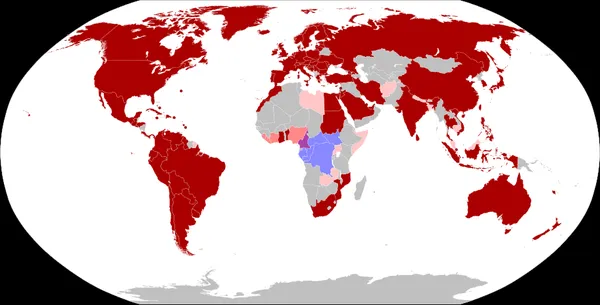
In May 2022, the World Health Organization (WHO) made an emergency announcement of the existence of a multi-country outbreak of mpox, a viral disease then commonly known as "monkeypox". The initial cluster of cases was found in the United Kingdom, where the first case was detected in London on 6 May 2022 in a patient with a recent travel history from Nigeria where the disease has been endemic. On 16 May, the UK Health Security Agency (UKHSA) confirmed four new cases with no link to travel to a country where mpox is endemic. Subsequently, cases have been reported from many countries and regions. The outbreak marked the first time mpox had spread widely outside Central and West Africa. The disease had been circulating and evolving in human hosts over several years before the outbreak and was caused by the clade IIb variant of the virus. On 23 July 2022, the director-general of the WHO, Tedros Adhanom Ghebreyesus, declared the outbreak a public health emergency of international concern (PHEIC), stating that "we have an outbreak that has spread around the world rapidly, through new modes of transmission, about which we understand too little". A global response to the outbreak included public awareness campaigns in order to reduce spread of the disease, and repurposing of smallpox vaccines. In May 2023, the World Health Organization declared an end to the PHEIC, citing steady progress in controlling the spread of the disease. Relatively low levels of cases continued to occur, and as of 30 April 2026, there have been a total of 180,545 confirmed cases and 506 deaths in 144 countries. Mpox is a viral infection that manifests a week or two after exposure with fever and other non-specific symptoms, and then produces a rash with lesions that usually last for 2–4 weeks before drying up, crusting and falling off. While mpox can cause large numbers of lesions, in this outbreak some patients experience only a single lesion in the mouth or on the genitals, making it more difficult to differentiate from other infections. In previous outbreaks, 1–3 per cent of people with known infections had died (without treatment). In the 2022–2023 outbreak the rate of death was less than 0.2 percent. Cases in children and immunocompromised people are more likely to be severe. Mpox spreads through close, personal, often skin-to-skin contact.
Also on this shelf
Chagas disease.
Funeral.
See also
Uncatalogued shelfText from Wikipedia; plate via Wikimedia Commons. Text CC BY-SA 4.0; plate freely licensed (see Commons). Source record. Images and catalogue data are reproduced from open-access collections.