Science and Medicine
Epitope mapping
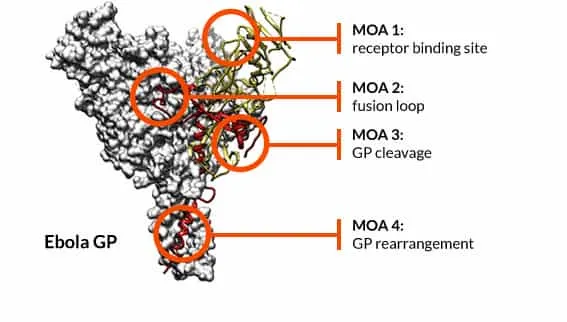
In immunology, epitope mapping is the process of experimentally identifying the binding site, or epitope, of an antibody on its target antigen (usually, on a protein). Identification and characterization of antibody binding sites aid in the discovery and development of new therapeutics, vaccines, and diagnostics. Epitope characterization can also help elucidate the binding mechanism of an antibody and can strengthen intellectual property (patent) protection. Experimental epitope mapping data can be incorporated into robust algorithms to facilitate in silico prediction of B-cell epitopes based on sequence and/or structural data. Epitopes are generally divided into two classes: linear and conformational/discontinuous. Linear epitopes are formed by a continuous sequence of amino acids in a protein. Conformational epitopes epitopes are formed by amino acids that are nearby in the folded 3D structure but distant in the protein sequence. Note that conformational epitopes can include some linear segments. B-cell epitope mapping studies suggest that most interactions between antigens and antibodies, particularly autoantibodies and protective antibodies (e.g., in vaccines), rely on binding to discontinuous epitopes.
Also on this shelf
Islamic world contributions to Medieval Europe.
Human papillomavirus infection.
See also
Uncatalogued shelfText from Wikipedia; plate via Wikimedia Commons. Text CC BY-SA 4.0; plate freely licensed (see Commons). Source record. Images and catalogue data are reproduced from open-access collections.