Science and Medicine
Brachytherapy
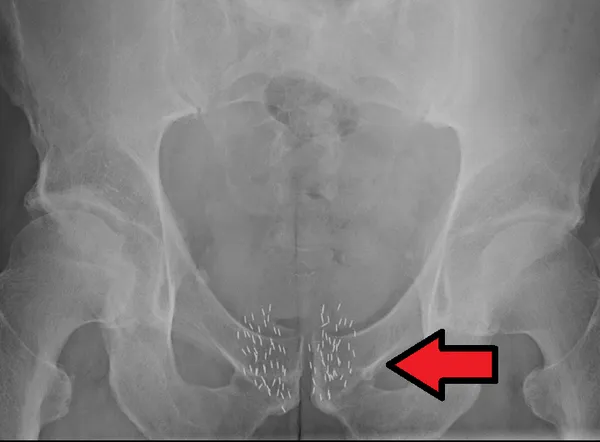
Brachytherapy is a form of radiation therapy where a sealed radiation source is placed inside or next to the area requiring treatment. The word "brachytherapy" comes from the Greek word βραχύς, brachys, meaning "short-distance" or "short". Brachytherapy is commonly used as an effective treatment for cervical, prostate, breast, esophageal and skin cancer and can also be used to treat tumours in many other body sites. Treatment results have demonstrated that the cancer-cure rates of brachytherapy are either comparable to surgery and external beam radiotherapy (EBRT) or are improved when used in combination with these techniques. Brachytherapy can be used alone such as in early prostate cancer or in combination with other therapies such as surgery, EBRT and chemotherapy such as in advanced cervical cancer Brachytherapy contrasts with unsealed source radiotherapy, in which a therapeutic radionuclide (radioisotope) is injected into the body to chemically localize to the tissue requiring destruction. It also contrasts to External Beam Radiation Therapy (EBRT), in which high-energy x-rays (or occasionally gamma-rays from a radioisotope like cobalt-60) are directed at the tumour from outside the body. Brachytherapy instead involves the precise placement of short-range radiation-sources (radioisotopes, iodine-125 or caesium-131 for instance) directly at the site of the cancerous tumour. These are enclosed in a protective capsule or wire, which allows the ionizing radiation to escape to treat and kill surrounding tissue but prevents the charge of radioisotope from moving or dissolving in body fluids. The capsule may be removed later, or (with some radioisotopes) it may be allowed to remain in place. A feature of brachytherapy is that the irradiation affects only a very localized area around the radiation sources. Exposure to radiation of healthy tissues farther away from the sources is therefore reduced. In addition, if the patient moves or if there is any movement of the tumour within the body during treatment, the radiation sources retain their correct position in relation to the tumour.
Also on this shelf
Ergonomics.
Adam Christian Thebesius.
See also
Uncatalogued shelfText from Wikipedia; plate via Wikimedia Commons. Text CC BY-SA 4.0; plate freely licensed (see Commons). Source record. Images and catalogue data are reproduced from open-access collections.