Science and Medicine
Egyptian temple
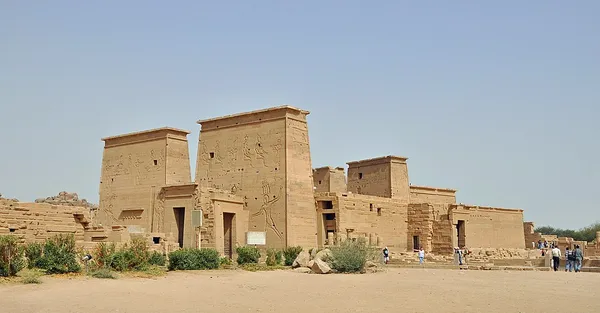
Egyptian temples were places of worship built across ancient Egypt for the sake of the gods and goddesses and in commemoration of the reigning pharaoh. They were seen as houses for the gods or kings to whom they were dedicated. Performed within them were the central rituals of the Egyptian religion: giving offerings to the gods; re-enacting their mythology through festivals; and warding off the forces of chaos. These rituals were seen as necessary for the gods to continue to uphold ma'at—the divine order of the universe. Caring for the gods was the obligation of every pharaoh, who dedicated prodigious resources to temple construction and maintenance. Pharaohs delegated most of their ritual duties to priests, but most of the populace was excluded from direct participation in ceremonies and forbidden to enter a temple's most sacred areas. Nevertheless, a temple was an important religious site for all social classes of the Egyptian people, who went there to pray, give offerings, and seek guidance from an oracle. The most important part of the temple was the sanctuary, which typically contained a cult image of its god. The rooms outside the sanctuary grew larger and more elaborate over time such that temples evolved from small shrines in late prehistoric Egypt (late 4th millennium BC) to large stone edifices in the New Kingdom (c. 1570–1069 BC) and later. These edifices are among the largest and most enduring examples of ancient Egyptian architecture, with their elements arranged and decorated according to complex religious symbolism. Their typical layout comprised a series of enclosed halls, open courts, and entrance pylons aligned along the path used for festival processions. Beyond the temple proper was an outer wall enclosing secondary buildings. A large temple owned sizable tracts of land and employed thousands of laymen to supply its needs. Thus, temples were also key economic centres in addition to religious ones. The priests who managed these powerful institutions wielded considerable influence, and despite their ostensible subordination to the king, they may have posed significant challenges to his authority. Temple-building in Egypt continued despite the nation's decline and ultimate loss of independence to the Roman Empire in 30 BC.
Also on this shelf
Ibrahima Socé Fall.
Brincidofovir.
See also
Uncatalogued shelfText from Wikipedia; plate via Wikimedia Commons. Text CC BY-SA 4.0; plate freely licensed (see Commons). Source record. Images and catalogue data are reproduced from open-access collections.