Science and Medicine
Hospital-acquired infection
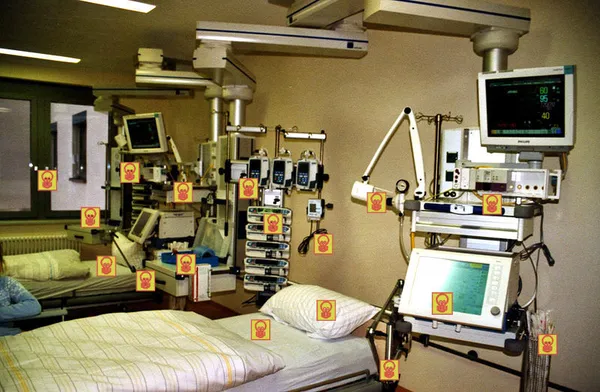
A hospital-acquired infection (HAI), also known as a nosocomial infection (from Greek nosokomeîon "hospital, infirmary", from nósos "disease" + koméō "to tend, care for", with locative suffix -eîon), is an infection that is acquired in a hospital or other healthcare facility. To encompass both hospital and non-hospital settings, it is sometimes instead called a healthcare-associated infection. Such an infection can be acquired in a hospital, nursing home, rehabilitation facility, outpatient clinic, diagnostic laboratory or other clinical settings. The term nosocomial infection is used when there is a lack of evidence that the infection was present when the patient entered the healthcare setting, thus meaning it was acquired or became problematic post-admission. A number of dynamic processes can bring contamination into operating rooms and other areas within nosocomial settings. Infection is spread to the susceptible patient in the clinical setting by various means. Healthcare staff also spread infection, as can contaminated equipment, bed linens, or air droplets. The infection can originate from the outside environment, another infected patient, staff that may be infected, or—in some cases—the source of infection cannot be determined. In some cases the microorganism originates from the patient's own skin microbiota, becoming opportunistic after surgery or other procedures that compromise the protective skin barrier or immune system. Though the patient may have contracted the infection from their own skin, the infection is still considered nosocomial since it develops in the health care setting.
Also on this shelf
Breast cancer awareness.
Health in Brunei.
See also
Uncatalogued shelfText from Wikipedia; plate via Wikimedia Commons. Text CC BY-SA 4.0; plate freely licensed (see Commons). Source record. Images and catalogue data are reproduced from open-access collections.