Science and Medicine
COVID-19 pandemic in Hong Kong
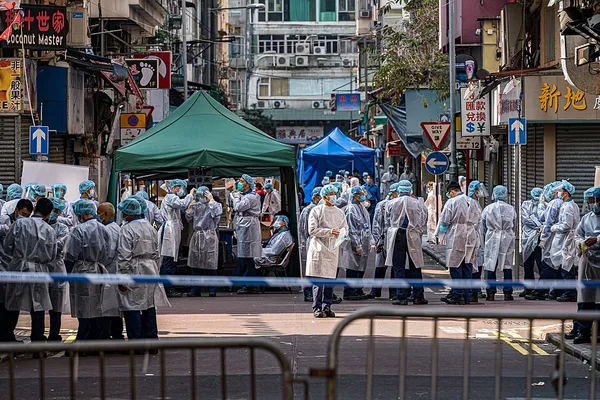
The COVID-19 pandemic in Hong Kong is part of the worldwide pandemic of coronavirus disease 2019 (COVID-19) caused by severe acute respiratory syndrome coronavirus 2 (SARS-CoV-2). The virus was first confirmed to have spread to Hong Kong on 23 January 2020. Confirmed cases were generally transferred to Princess Margaret Hospital's Infectious Disease Centre for isolation and centralised treatment. On 5 February, after a five-day strike by front-line medical workers, the Hong Kong government closed all but three border control points, with Hong Kong International Airport, Shenzhen Bay Control Point, and Hong Kong–Zhuhai–Macau Bridge Control Point remaining open. Hong Kong was relatively unscathed by the first wave of the COVID-19 outbreak, and had a flatter epidemic curve than most other places, which observers consider remarkable given its status as an international transport hub. Furthermore, its proximity to China and its millions of mainland visitors annually would make it vulnerable. Some experts now believe the habit of wearing masks in public since the SARS epidemic of 2003 may have helped keep its confirmed infections at 845, with four deaths, by the beginning of April. In a study published in April 2020 in the Lancet, the authors expressed their belief that border restrictions, quarantine and isolation, social distancing, and behavioural changes such as wearing masks likely all played a part in the containment of the disease up to the end of March. Others attributed the success to critical thinking of citizens who have become accustomed to distrusting the competence and political motivations of the government, the World Health Organization, and the Chinese Communist Party. After a much smaller second wave in late March and April 2020 caused by overseas returnees rushing to beat mandatory quarantine, Hong Kong saw a substantial uptick in COVID cases in July, with more than a hundred cases being reported several days in a row until early August. Experts attributed this third wave to imported cases – sea crew, aircrew members, and domestic helpers made up the majority of 3rd wave infections. In late November 2020 the city entered a fourth wave, called "severe" by Chief Executive Carrie Lam.
Also on this shelf
Face masks during the COVID-19 pandemic in the United States.
AdventHealth.
See also
Uncatalogued shelfText from Wikipedia; plate via Wikimedia Commons. Text CC BY-SA 4.0; plate freely licensed (see Commons). Source record. Images and catalogue data are reproduced from open-access collections.