Science and Medicine
Islamic Golden Age
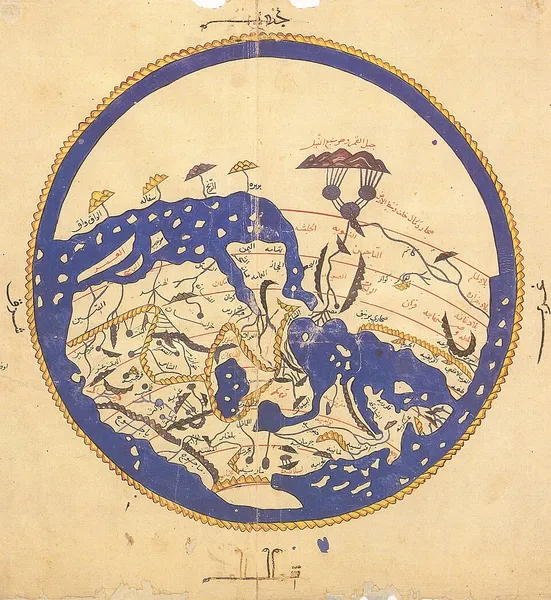
The Islamic Golden Age was a period of cultural flourishing in the history of Islam, dated from the 8th century CE to the 14th century. The period is understood to have begun during the reign of the Abbasid caliph Harun al-Rashid (786–809), with the establishment of the House of Wisdom in Baghdad, one of the world's largest cities at the time. The institution attracted scholars from across the Muslim world to translate the classical knowledge of the known world into Arabic. In addition to Baghdad, the intellectual and cultural activity also flourished in other urban centers of the medieval Islamic world, including Cairo, and Umayyad Córdoba (capital of Al-Andalus), as well as Damascus, Nishapur, Samarkand, Ghazni, Kairouan, and Fez, and in later centuries, Nasrid Granada. The period is said to have ended with the collapse of the Abbasid caliphate following the Mongol invasions and the Siege of Baghdad in 1258. Select scholars extend the end of the golden age to around 1350, thereby including the Timurid Renaissance. Others extend it to the 15th century, including the Nasrid Kingdom of Granada, whose court remained an important centre of scholarship, culture and literature, or even to the 16th century, incorporating the rise of the Islamic gunpowder empires.
Also on this shelf
Edmontonia.
2025 Équateur province malaria outbreak.
See also
Uncatalogued shelfText from Wikipedia; plate via Wikimedia Commons. Text CC BY-SA 4.0; plate freely licensed (see Commons). Source record. Images and catalogue data are reproduced from open-access collections.