Science and Medicine
Anopheles
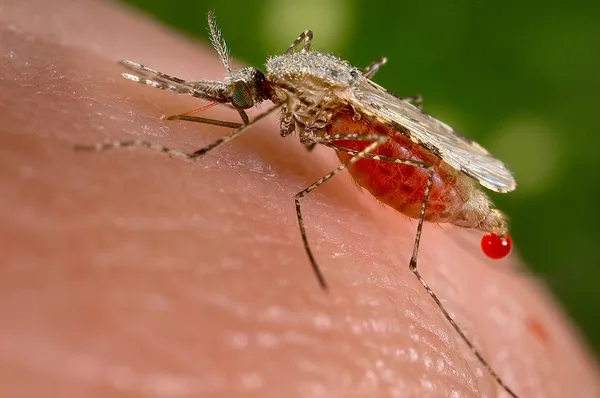
Anopheles () is a genus of mosquito first described by the German entomologist J. W. Meigen in 1818, and are known as nail mosquitoes and marsh mosquitoes. Many such mosquitoes are vectors of the parasite Plasmodium, a genus of protozoans that cause malaria in birds, reptiles, and mammals, including humans. The Anopheles gambiae mosquito is the best-known species of marsh mosquito that transmits the Plasmodium falciparum, which is a malarial parasite deadly to human beings; no other mosquito genus is a vector of human malaria. The genus Anopheles diverged from other mosquitoes approximately 100 million years ago (mya), and, like other mosquitoes, the eggs, larvae, and pupae are aquatic. The Anopheles larva has no respiratory siphon through which to breathe, so it breathes and feeds with its body horizontal to the surface of the water. The adult mosquito hatches from the surface and feeds on the nectar of flowers; the female mosquito also feeds on blood, which animal diet allows them to carry and transmit parasites between hosts. The adult's feeding position is head-down, unlike the horizontal stance of the culicines. Anopheles are distributed almost worldwide, throughout the tropics, the subtropics, and the temperate regions of planet Earth. In hot weather, adult Anopheles aestivate, which is a state of dormancy that enables the mosquito to survive in hot dry regions, such as the Sahel.
Also on this shelf
Giardiasis.
HIV/AIDS in Europe.
See also
Uncatalogued shelfText from Wikipedia; plate via Wikimedia Commons. Text CC BY-SA 4.0; plate freely licensed (see Commons). Source record. Images and catalogue data are reproduced from open-access collections.