Photography
Douglas W. Owsley
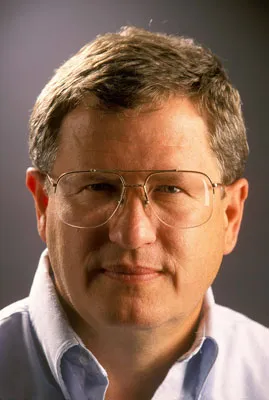
Douglas W. Owsley (born July 21, 1951) is an American anthropologist who is the curator of Biological Anthropology at the Smithsonian's National Museum of Natural History (NMNH). He is a respected and well-known forensic anthropologist and archaeologist who has been involved in several high-profile investigations. In September 2001, he provided scientific analysis at the military mortuary located at Dover Air Force Base, following the 9/11 attack in Washington, D.C. The following year, the US Department of Defense honored him with the Commander's Award for Civilian Service for helping in the identification of 60 federal and civilian victims who died when American Airlines Flight 77 hit the Pentagon. Other notable cases include analysis and identification of Jeffrey Dahmer's first victim; excavation and study of the H. L. Hunley Confederate submarine in Charleston Harbor; excavation of the historic Jamestown Colony; analysis and identification of 82 victims of the siege at the Branch Davidian compound near Waco, Texas; processing and identification of US servicemen killed during Operation Desert Storm; and research, analysis, and identification of individuals buried in 17th-century iron coffins discovered in the Chesapeake Bay area of Maryland. Owsley was also involved in the debate over claims of ownership and ancestry of the Kennewick Man, which he analysed and erroneously concluded that the remains were not related to present-day Native Americans. The 1996 discovery of the skeletal remains of the prehistoric Paleo-Indian man dating back to a calibrated age of 9,800 years in Kennewick, Washington, along the Columbia River sparked much academic debate and resulted in an extended court battle that Owsley was a party to. He has worked on archaeological excavations and skeletal analyses on populations from colonial North America, Plains Indians and from Polynesia.
Also on this shelf
History of the United Kingdom.
Fresco.
See also
Uncatalogued shelfText from Wikipedia; plate via Wikimedia Commons. Text CC BY-SA 4.0; plate freely licensed (see Commons). Source record. Images and catalogue data are reproduced from open-access collections.