Photography
Autochrome Lumière
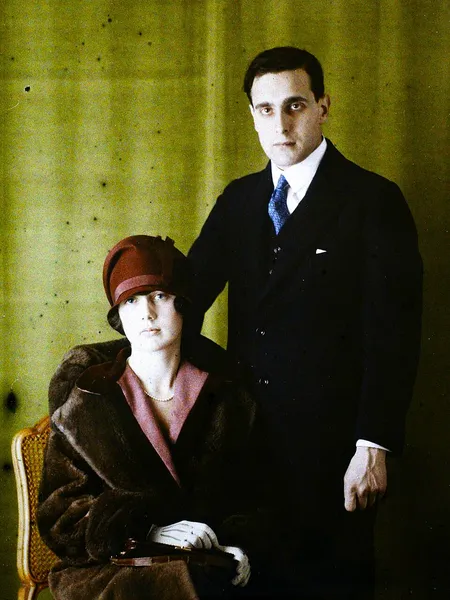
The Autochrome Lumière was an early colour photography process patented in 1903 by the Lumière brothers in France and first marketed in 1907. Autochrome was an additive color "mosaic screen plate" process. It was one of the principal colour photography processes in use before the advent of subtractive color film in the mid-1930s. Prior to the Lumière brothers, colour photography was based on the three‑colour principle first suggested by Scottish physicist James Clerk Maxwell in 1855. Louis Ducos du Hauron utilized the separation technique to create colour images on paper with screen plates, producing natural colours through superimposition, which would become the foundation of all commercial colour photography. Descendants of photographer Antoine Lumière, inventors Louis and Auguste Lumière utilized Du Hauron's (1869) technique, which had already been improved upon by other inventors such as John Joly (1894) and James William McDonough (1896), making it possible to print photographic images in colour. One of the most broadly used forms of colour photography in the early twentieth century, autochrome was recognized for its aesthetic appeal.
Also on this shelf
Achille Castiglioni.
Abul Kalam Azad (photographer).
See also
Uncatalogued shelfText from Wikipedia; plate via Wikimedia Commons. Text CC BY-SA 4.0; plate freely licensed (see Commons). Source record. Images and catalogue data are reproduced from open-access collections.