Photography
Cristero War
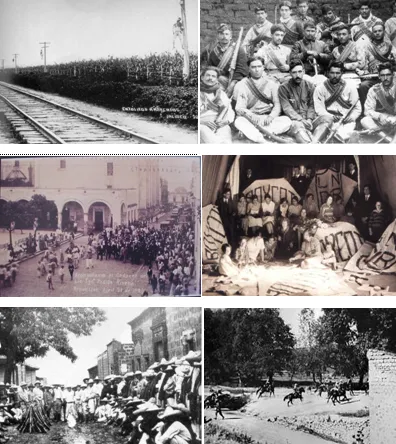
The Cristero War (Spanish: La guerra cristera), also known as the Cristero Rebellion or La Cristiada [la kɾisˈtjaða], was a widespread struggle in central and western Mexico from 3 August 1926 to 21 June 1929 in response to the implementation of secularist and anticlerical articles of the 1917 Constitution. The rebellion was instigated as a response to an executive decree by Mexican President Plutarco Elías Calles to strictly enforce Article 130 of the Constitution, an implementing act known as the Calles Law. Calles sought to limit the power of the Catholic Church in Mexico and its affiliated organizations and to suppress popular religiosity. The rural uprising in north-central Mexico was tacitly supported by the Church hierarchy and was aided by urban Catholic supporters. The Mexican Army received support from the United States. American Ambassador Dwight Morrow brokered negotiations between the Calles government and the Church. The government made some concessions, the Church withdrew its support for the Cristero fighters, and the conflict ended in 1929. The rebellion has been variously interpreted as a major event in the struggle between church and state that dates back to the 19th century with the War of Reform, and as the last major peasant uprising in Mexico after the end of the military phase of the Mexican Revolution in 1920. The end of the first conflict did not bring an immediate to armed resistance. In the latter half of the 1930s a second wave of armed resistance emerge, partly in response to socialist education reforms implemented by the Mexican government. The period of conflict became known as the Second Cristero War (La Segunda). Although the smaller and scale than the first Cristero War, the conflict continued in the late 1930s and, in some regions persisted into the early 1940s.
Also on this shelf
Harun Mehmedinović.
Carla De Benedetti.
See also
Uncatalogued shelfText from Wikipedia; plate via Wikimedia Commons. Text CC BY-SA 4.0; plate freely licensed (see Commons). Source record. Images and catalogue data are reproduced from open-access collections.