Photography
Ferdinand Marcos
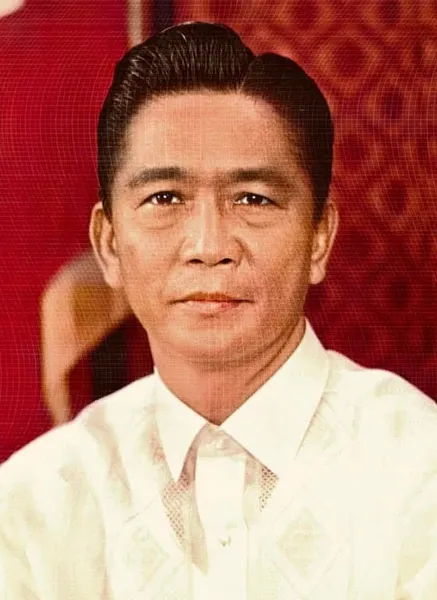
Ferdinand Emmanuel Edralin Marcos Sr. (September 11, 1917 – September 28, 1989) was a Filipino lawyer and politician who served as the tenth president of the Philippines from 1965 to 1986. From 1972 to 1981, Marcos ruled the Philippines under martial law, embracing a policy of "constitutional authoritarianism." Following the lifting of martial law in 1981, a wide-ranging economic crisis, and the assassination of Ninoy Aquino, Marcos was deposed in 1986 by the People Power Revolution and was succeeded as president by Aquino's widow, Corazon Aquino. He was also the father of Bongbong Marcos, the incumbent president of the Philippines since 2022. Marcos was born in Ilocos Norte in 1917. His father, Mariano Marcos, was a lawyer and politician who was later executed by guerillas for collaboration with the Japanese Army during World War II. In 1940, Marcos and his father were convicted of assassinating a political rival, Julio Nalundasan, but the conviction was overturned on appeal. Marcos joined the United States Army after the attack on Pearl Harbor in 1941 and fought the Japanese, who held him as a prisoner of war in 1942. After the war, he practiced law and was elected to represent Ilocos Norte in the Philippines House of Representatives from 1949 to 1959. He was elected to the Senate of the Philippines from 1959 to 1965, and served as Senate president from 1963 to 1965. He advanced his political career by exaggerating his military record, fraudulently including claims that he was "the most decorated war hero in the Philippines." In 1965, Marcos was elected to his first term as president; he was re-elected in 1969. His initial policies included massive infrastructure development and construction, which made him popular but were funded by foreign lending. During his second term, debt and inflation crises and growing Philippine involvement in the Vietnam War triggered domestic social unrest. In 1972, Marcos declared martial law, ruling the country as a dictator until 1981. His rule was ratified through a 1973 plebiscite administered and overseen by the military. During this period, the constitution was revised to empower Marcos, and media outlets and opposition politicians were silenced. The Marcos regime used violence to suppress political opposition, including Muslims and suspected communists, whom he declared a threat to the Philippines.
Also on this shelf
Dianne Blell.
Fernald Hall.
See also
Uncatalogued shelfText from Wikipedia; plate via Wikimedia Commons. Text CC BY-SA 4.0; plate freely licensed (see Commons). Source record. Images and catalogue data are reproduced from open-access collections.