Photography
Bernard Hoffman
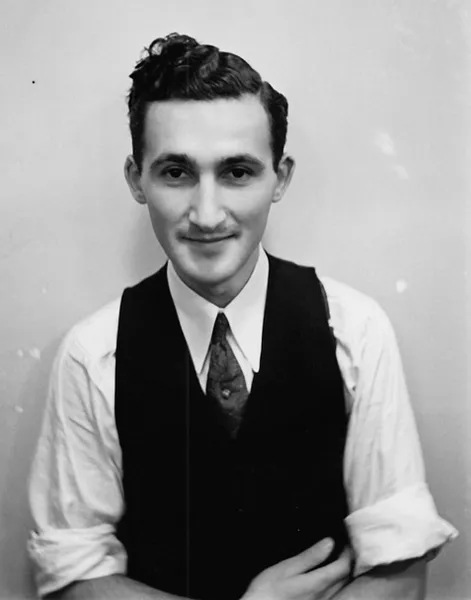
Bernard Hoffman (1913–1979) was an American photographer and documentary photographer. The bulk of his photographic journalism was done during the first 18 years of the revamped Life magazine, starting in 1936. During this time he produced many photo essays, including a shoot with Carl Sandburg in 1938. He is, perhaps, most known as the first American photographer on the ground at Hiroshima and Nagasaki after the atomic bomb was dropped in 1945, providing some harrowing glimpses into the destructive power of the bomb. After leaving Life in 1951, Hoffman went on to establish Bernard Hoffman Laboratories, a company dedicated to improving the technology for professional photography. The lab was well-known enough that in 1963 he was brought on to process film from the Kennedy assassination, leading to support for belief in the infamous "shooter on the grassy knoll." Following the sale of the lab in 1973, he spent his retirement years running photography workshops with his wife, Inez. Hoffman died of amyotrophic lateral sclerosis (also known as Lou Gehrig's disease) in 1979.
Also on this shelf
History of Darfur.
Ellen Kuras.
See also
Uncatalogued shelfText from Wikipedia; plate via Wikimedia Commons. Text CC BY-SA 4.0; plate freely licensed (see Commons). Source record. Images and catalogue data are reproduced from open-access collections.