Photography
History of photography
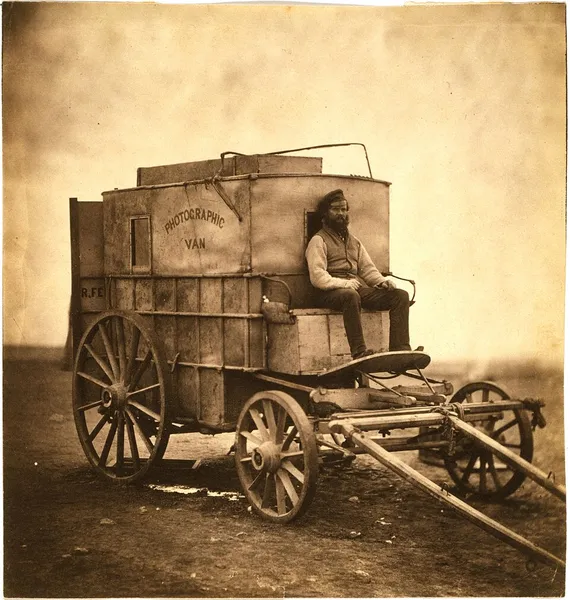
The history of photography began with the discovery of two critical principles: The first is camera obscura image projection; the second is the discovery that some substances are visibly altered by exposure to light. There are no artifacts or descriptions that indicate any attempt to capture images with light sensitive materials prior to the 18th century. Around 1718, Johann Heinrich Schulze used a light-sensitive slurry to capture images of cut-out letters on a bottle. However, he did not pursue making these results permanent. Around 1800, Thomas Wedgwood made the first reliably documented, although unsuccessful attempt at capturing camera images in permanent form. His experiments did produce detailed photograms, but Wedgwood and his associate Humphry Davy found no way to fix these images. In 1826 or 1827, Nicéphore Niépce first managed to fix an image that was captured with a camera, but at least eight hours or even several days of exposure in the camera were required and the earliest results were very crude. Niépce's associate Louis Daguerre went on to develop the daguerreotype process, the first publicly announced and commercially viable photographic process. The daguerreotype required only minutes of exposure in the camera, and produced clear, finely detailed results. On August 2, 1839 Daguerre demonstrated the details of the process to the Chamber of Peers in Paris. On August 19 the technical details were made public in a meeting of the Academy of Sciences and the Academy of Fine Arts in the Palace of Institute. When the metal based daguerreotype process was demonstrated formally to the public, the competitor approach of paper-based calotype negative and salt print processes invented by Henry Fox Talbot was already demonstrated in London (but with less publicity). Subsequent innovations made photography easier and more versatile. New materials reduced the required camera exposure time from minutes to seconds, and eventually to a small fraction of a second; new photographic media were more economical, sensitive or convenient. Since the 1850s, the collodion process with its glass-based photographic plates combined the high quality known from the Daguerreotype with the multiple print options known from the calotype and was commonly used for decades. Roll films popularized casual use by amateurs.
Also on this shelf
David Fincher.
Hulleah Tsinhnahjinnie.
See also
Uncatalogued shelfText from Wikipedia; plate via Wikimedia Commons. Text CC BY-SA 4.0; plate freely licensed (see Commons). Source record. Images and catalogue data are reproduced from open-access collections.