Photography
Cuban Revolution
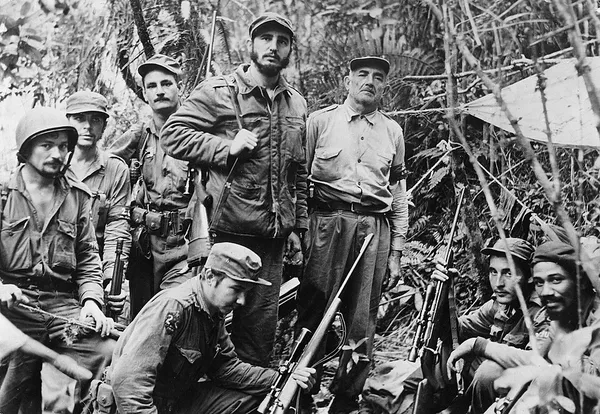
The Cuban Revolution (Spanish: Revolución cubana) was the military and political movement that overthrew the dictatorship of Fulgencio Batista, who had ruled Cuba from 1952 to 1959. The revolution began after the 1952 Cuban coup d'état, in which Batista overthrew the emerging Cuban democracy and consolidated power. Among those who opposed the coup was Fidel Castro, then a young lawyer, who initially tried to challenge the takeover through legal means in the Cuban courts. When these efforts failed, Fidel Castro and his brother Raúl led an armed assault on the Moncada Barracks, a Cuban military post, on 26 July 1953. Following the attack's failure, Fidel Castro and his co-conspirators were arrested and formed the 26th of July Movement (M-26-7) in detention. At his trial, Fidel Castro launched into a two-hour speech that won him national fame as he laid out his grievances against the Batista dictatorship. In an attempt to win public approval, Batista granted amnesty to the surviving Moncada Barracks attackers and the Castros fled into exile. During their exile, the Castros consolidated their strategy in Mexico and subsequently reentered Cuba in 1956, accompanied by Argentinian revolutionary Ernesto "Che" Guevara, whom they had encountered during their time in Mexico. Returning to Cuba aboard the Granma, the Castros, Guevara, and other supporters encountered gunfire from Batista's troops. The rebels fled to the Sierra Maestra where the M-26-7 rebel forces would reorganize, conducting urban sabotage and covert recruitment. Over time the Popular Socialist Party, once the largest and most powerful organizations opposing Batista, would see its influence and power wane in favor of the 26th of July Movement. As the irregular war against Batista escalated, the rebel forces transformed from crude, guerrilla fighters into a cohesive fighting force that could confront Batista's army in military engagements. By the time the rebels were able to oust Batista, the revolution was being driven by a coalition between the Popular Socialist Party, the 26th of July Movement and the Revolutionary Directorate of 13 March. The rebels, led by the 26th of July Movement, finally toppled Batista on 31 December 1958, after which he fled the country. Batista's government was dismantled as Castro became the most prominent leader of the revolutionary forces.
Also on this shelf
Baron Raimund von Stillfried.
Ben Burtt.
See also
Uncatalogued shelfText from Wikipedia; plate via Wikimedia Commons. Text CC BY-SA 4.0; plate freely licensed (see Commons). Source record. Images and catalogue data are reproduced from open-access collections.