Photography
Kansuke Yamamoto (artist)
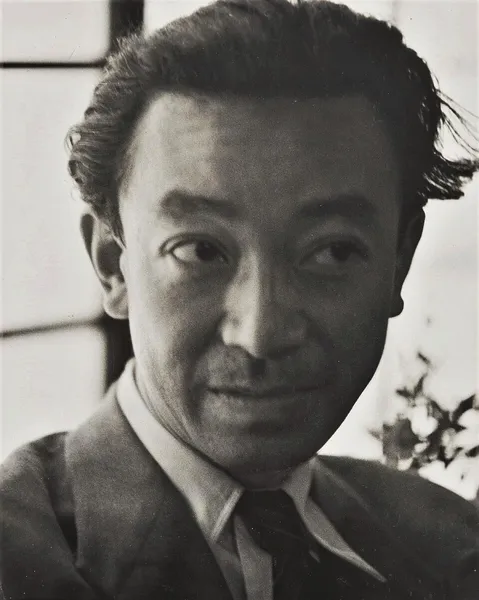
Kansuke Yamamoto (Japanese: 山本 悍右; 30 March 1914 – 2 April 1987) was a Japanese Surrealist photographer, poet, editor, and publisher based in Nagoya. Eiko Aoki describes him as a driving force in Japan's avant-garde movement, producing innovative photographs with an uncompromising spirit. Photography historian Ryūichi Kaneko regards the establishment of the 1932 date of Yamamoto's photocollage The Developing Thought of a Human... Mist and Bedroom and as a landmark for understanding the formation and development of modern Japanese photography in the 1930s. Drawing on French Surrealist literature and periodicals, Yamamoto developed a practice that Amanda Maddox and John Solt discuss in terms of interpretation, translation, and dialogue rather than belated imitation of European models. Yamamoto's Surrealist practice also took the form of editing, translation, and publishing. Through Yoru no Funsui, which he founded and edited in 1938, he brought together poetry, photography, translations of French Surrealist writing, and reproduced drawings. The journal ceased publication in 1939 under pressure from the Special Higher Police (Tokkō), and Yamamoto was questioned about the political meaning of his Surrealist photography and poetry. He nevertheless continued Surrealist publishing under wartime conditions through Carnet Bleu, including a Japanese translation of an essay on photography by Philippe Soupault. Maddox argues that Yamamoto resisted pressure to strip Surrealism of provocation, politics, and thought. After the war, Yamamoto continued to pursue Surrealist ideas through collective activity and new photographic forms. He co-founded VIVI in 1947, which Maddox describes as an effort to keep the spirit of Surrealist ideology alive in the postwar period. Jelena Stojković traces Yamamoto's postwar photographic narratives from a pair of self-portraits made in 1949 to staged sequences of the 1950s, including My Thin-Aired Room (1956), in which he appeared as both actor and director. Stojković argues that these experiments made a direct link between Yamamoto's Surrealist background and emerging conceptual and performative uses of photography, and describes his work as a point of reference both for the prewar Japanese avant-garde and for the development of contemporary art and photography in Japan.
Also on this shelf
Ann Tenno.
I. K. Inha.
See also
Uncatalogued shelfText from Wikipedia; plate via Wikimedia Commons. Text CC BY-SA 4.0; plate freely licensed (see Commons). Source record. Images and catalogue data are reproduced from open-access collections.