Photography
Active-pixel sensor
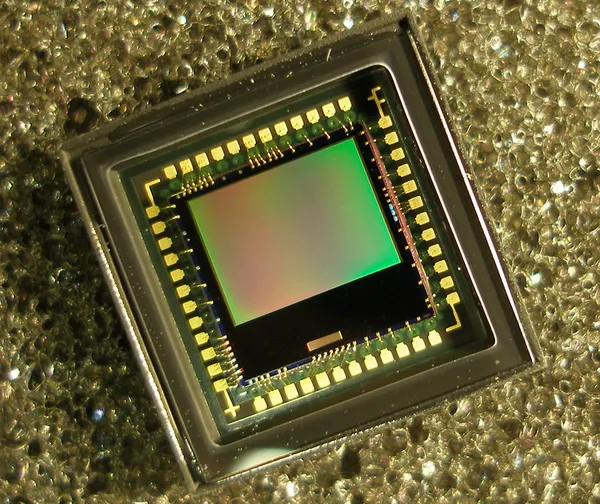
An active-pixel sensor (APS) is an image sensor where each pixel sensor unit cell has a photodetector (typically a pinned photodiode) and one or more active transistors. APS sensors are used in digital camera technologies such as cell phone cameras, web cameras, most modern digital pocket cameras, most digital single-lens reflex cameras (DSLRs), mirrorless interchangeable-lens cameras (MILCs), and lensless imaging for, e.g., blood cells. In a metal–oxide–semiconductor (MOS) active-pixel sensor, MOS field-effect transistors (MOSFETs) are used as amplifiers. There are different types of APS, including the early NMOS APS and the now much more common complementary MOS (CMOS) APS, also known as the CMOS sensor. CMOS sensors emerged as an alternative to charge-coupled device (CCD) image sensors and eventually outsold them by the mid-2000s. The term active pixel sensor is also used to refer to the individual pixel sensor itself, as opposed to an array of such individuals, the image sensor. In this case, the image sensor is sometimes called an active pixel sensor imager or active-pixel image sensor.
Also on this shelf
Augusta Caroline Crofton.
110 film.
See also
Uncatalogued shelfText from Wikipedia; plate via Wikimedia Commons. Text CC BY-SA 4.0; plate freely licensed (see Commons). Source record. Images and catalogue data are reproduced from open-access collections.