Photography
Copyfraud
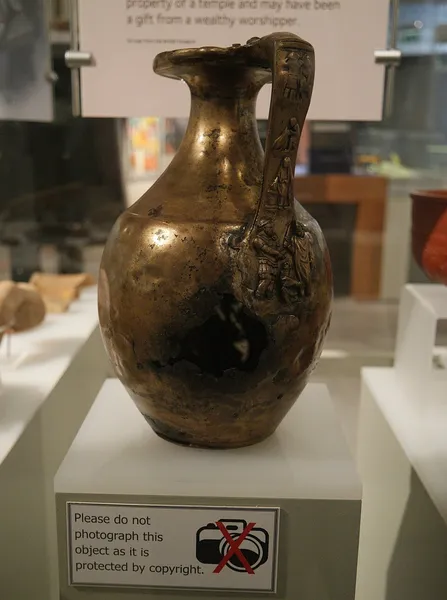
A copyfraud is a false copyright claim by an individual or institution with respect to content that is in the public domain. Such claims are unlawful, at least under US and Australian copyright law, because material that is not copyrighted is free for all to use, modify and reproduce. Copyfraud also includes overreaching claims by publishers, museums and others, as where a legitimate copyright owner knowingly, or with constructive knowledge, claims rights beyond what the law allows. The term copyfraud was coined by Jason Mazzone, a professor of law at the University of Illinois. Because copyfraud carries little or no oversight by authorities and few legal consequences, it exists on a massive scale, with millions of works in the public domain falsely labelled as copyrighted. Payments are therefore unnecessarily made by businesses and individuals for licensing fees. Mazzone states that copyfraud stifles valid reproduction of free material, discourages innovation and undermines free speech rights. Other legal scholars have suggested public and private remedies, and a few cases have been brought involving copyfraud.
Also on this shelf
Amrita Sher-Gil.
C. W. J. Johnson.
See also
Uncatalogued shelfText from Wikipedia; plate via Wikimedia Commons. Text CC BY-SA 4.0; plate freely licensed (see Commons). Source record. Images and catalogue data are reproduced from open-access collections.