Photography
Humanist photography
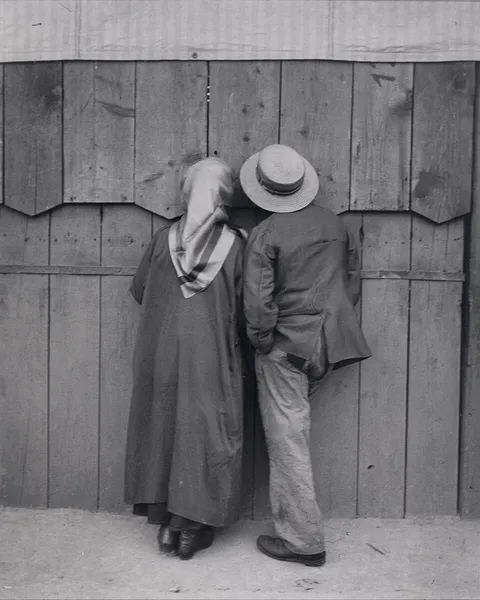
Humanist Photography, also known as the School of Humanist Photography, manifests the Enlightenment philosophical system in social documentary practice based on a perception of social change. It emerged in the mid-twentieth-century and is associated most strongly with Europe, particularly France. It can be distinguished from photojournalism, with which it forms a sub-class of reportage, as it is concerned more broadly with everyday human experience, to witness mannerisms and customs, than with newsworthy events, though practitioners are conscious of conveying particular conditions and social trends, often, but not exclusively, concentrating on the underclasses or those disadvantaged by conflict, economic hardship or prejudice. Humanist photography "affirms the idea of a universal underlying human nature". Jean Claude Gautrand describes humanist photography as: a lyrical trend, warm, fervent, and responsive to the sufferings of humanity [which] began to assert itself during the 1950s in Europe, particularly in France ... photographers dreamed of a world of mutual succour and compassion, encapsulated ideally in a solicitous vision.
Also on this shelf
Fine-art photography.
James Van Der Zee.
See also
Uncatalogued shelfText from Wikipedia; plate via Wikimedia Commons. Text CC BY-SA 4.0; plate freely licensed (see Commons). Source record. Images and catalogue data are reproduced from open-access collections.