Photography
Eli Lotar
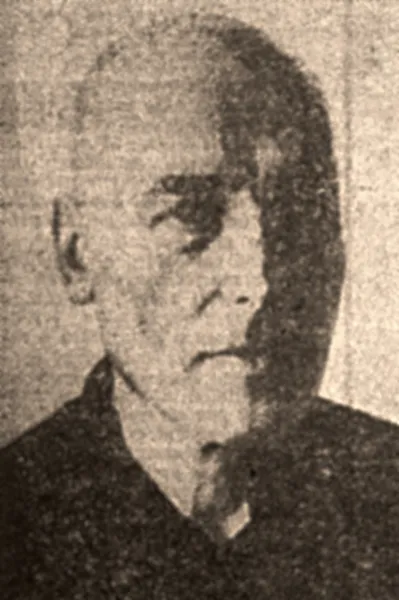
Eli Lotar (first name also Ely or Elie, last name also Lothar; born Eliazar or Eleazar Lotar Theodorescu; 30 January 1905 – 10 May 1969) was a French and Romanian photographer, cinematographer and film director. The eldest son of writer Tudor Arghezi, his mother was the schoolteacher and poet Constanța Zissu, who got pregnant with Arghezi when the latter was a monk in the Romanian Orthodox Church; Arghezi recognized him, and, upon being defrocked, married Zissu. Eliazar was cared for by his father and stepmother in Bucharest, becoming a resentful and rebellious child. He was reunited with Constanța after the World War I division of Romania, when she took him to Iași. He then attended Saint Sava National College, but often ran away to rejoin Zissu. Upon her death, he still rejected Arghezi's tutelage, and, before the end of 1924, fled to Paris. Almost exclusively known abroad as "Eli Lotar", he tried to build his career as an actor, only landing a small part in Jacques Feyder's Carmen. He was taken in as a lover and apprentice by the art photographer Germaine Krull, and through her joined the Parisian avant-garde—also breaking into photojournalism at Vu magazine. By 1927, Lotar was a respected photographer, though still largely imitative of Krull and László Moholy-Nagy, doing unit stills for directors such as Henri Desfontaines and Nikolai Malikoff. His stylistic emancipation began when he joined dissident surrealists like Roger Vitrac, Antonin Artaud, and Georges Bataille. The latter featured his stark images of slaughterhouses in Documents magazine, using them to illustrate his own discourse on the sanitized cruelty at the heart of human experiences. Lotar debuted as a cameraman under Alberto Cavalcanti's direction, and afterwards specialized in camera work for documentary films—in acclaimed collaborations with Vitrac, Joris Ivens, Jacques Brunius, and Jean Painlevé. A student of Marxism, passionate about working-class struggles, Lotar aligned himself with the French Communist Party. In 1932, he engaged in political work alongside documentarian Yves Allégret, with whom he tried to visit and film the destitute communities of Las Hurdes, in Republican Spain. They were stopped in Andalusia by hostile crowds; they went to Tenerife, making a documentary piece for Pathé. Lotar only reached Las Hurdes in 1933, alongside Luis Buñuel and Pierre Unik.
Also on this shelf
Adam Broomberg.
Camera obscura.
See also
Uncatalogued shelfText from Wikipedia; plate via Wikimedia Commons. Text CC BY-SA 4.0; plate freely licensed (see Commons). Source record. Images and catalogue data are reproduced from open-access collections.