Photography
History of Darfur
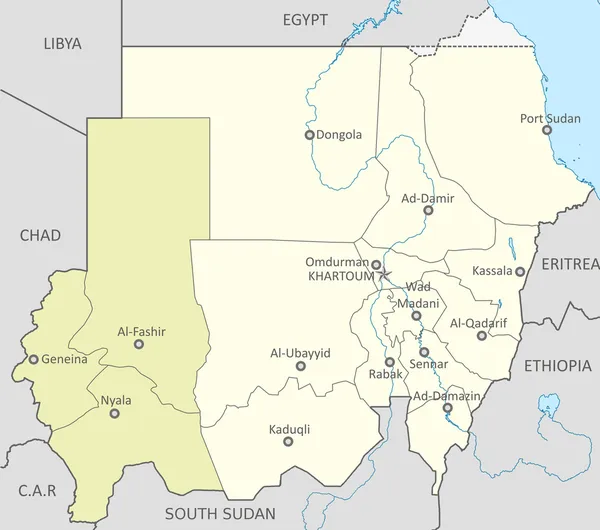
Throughout its history, Darfur has been the home to several cultures and kingdoms, such as the Daju and Tunjur kingdoms. The recorded history of Darfur begins in the seventeenth century, with the foundation of the Fur Sultanate by the Keira dynasty. The Sultanate of Darfur was initially conquered in 1874 by the Khedivate of Egypt. In 1899, the government of Anglo-Egyptian Sudan recognized Ali Dinar as the Sultan of Darfur, in exchange for an annual tribute of 500 pound sterling. This lasted until Darfur was formally annexed in 1916. The region remained underdeveloped through the period of colonial rule and after independence in 1956. The majority of national resources were directed toward the riverine Arabs clustered along the Nile near Khartoum. This pattern of structural inequality and underdevelopment resulted in increasing restiveness among Darfuris. The influence of regional geopolitics and war by proxy, coupled with economic hardship and environmental degradation, from soon after independence led to sporadic armed resistance from the mid-1980s. Violence in Darfur culminated in an armed resistance movement around 2003.
Also on this shelf
Gabriel Lekegian.
Arnold Newman.
See also
Uncatalogued shelfText from Wikipedia; plate via Wikimedia Commons. Text CC BY-SA 4.0; plate freely licensed (see Commons). Source record. Images and catalogue data are reproduced from open-access collections.