Photography
Eiji Tsuburaya filmography
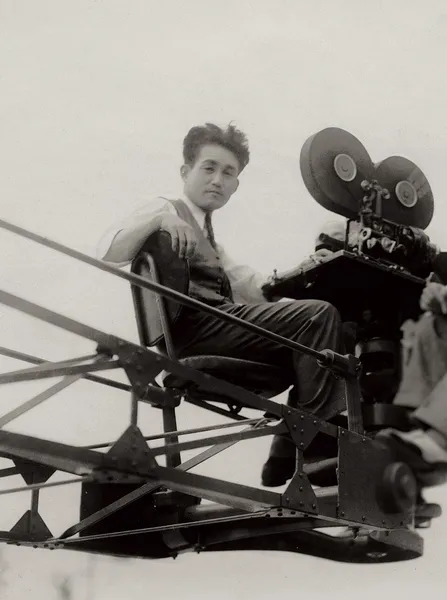
Eiji Tsuburaya (1901–1970) was a Japanese special effects director and filmmaker who worked on roughly 250 films throughout his five-decade career. Having pioneered and popularized the special effects sector of the Japanese film industry, he is popularly known as the "Father of Tokusatsu". Tsuburaya started his career in the Japanese film industry as a cinematographer for several successful dramas and jidaigeki (Japanese historical drama) films in the early 1920s. His directorial debut was the propaganda documentary film Three Thousand Miles Across the Equator, which he filmed in the Pacific Ocean on the Asama for most of 1935. Following the completion of photography on this film, he worked as the cinematographer and had his debut as special effects director on Princess Kaguya (1935). It was one of Japan's first major productions to feature special effects. The next year, Tsuburaya made his dramatic directorial debut with the release of Folk Song Collection: Oichi of Torioi Village and had substantial success staging the special effects for Arnold Fanck's The Daughter of the Samurai (released in 1937). Tsuburaya left his job in Kyoto and moved to Tokyo in order to form the newly established company Toho's special effects division in late 1937. The following year, he was assigned to create effects for The Abe Clan and directed and filmed the unreleased propaganda musical The Song of Major Nanjo; two years later, he directed and shot the documentary motion picture entitled The Imperial Way of Japan and shot the war film Navy Bomber Squadron. In 1942, Tsuburaya supervised the effects for the Kajirō Yamamoto-directed war epic The War at Sea from Hawaii to Malaya, which became the highest-grossing Japanese film in history. His efforts were regarded as a significant factor in its major critical and commercial success and earned him the Technical Research Award from the Japan Motion Picture Cinematographers Association. Tsuburaya was purged from employment at Toho by the Supreme Commander for the Allied Powers in 1948. He created his own independent effects company and worked on films by other major film companies, including Daiei Film's The Invisible Man Appears (1949), which was Japan's first science fiction film.
Also on this shelf
George Eastman.
Ben Burtt.
See also
Uncatalogued shelfText from Wikipedia; plate via Wikimedia Commons. Text CC BY-SA 4.0; plate freely licensed (see Commons). Source record. Images and catalogue data are reproduced from open-access collections.