Photography
Beaune-la-Rolande internment camp
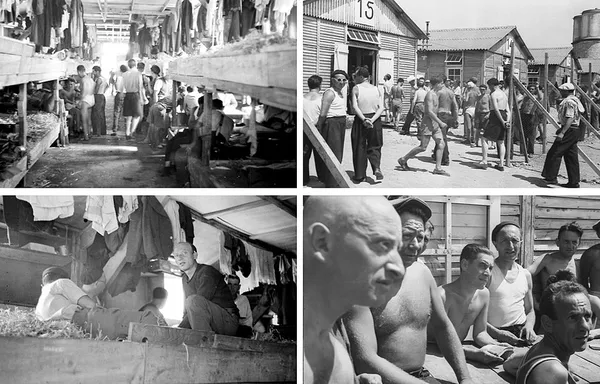
The Beaune-la-Rolande internment camp was a transit and detention facility operated by French and German authorities in Nazi-occupied France during the Second World War. Built in 1939 in the Beaune-la-Rolande commune, Loiret, to house German prisoners of war, it was repurposed after France's defeat in 1940 to detain French POWs. From 1941, it was used to intern foreign-born Jews living in the Paris region. In May 1942, following the establishment of direct German control, mass deportations to extermination camps, primarily Auschwitz, began. Among the victims were more than 1,500 children arrested during the Vel' d'Hiv Roundup and deported via Beaune-la-Rolande to Auschwitz, where most were murdered. After returning to French control in September 1942, the camp was used to hold political prisoners and individuals considered "non-deportable" before its closure in August 1943. Alongside Drancy and Pithiviers, Beaune-la-Rolande formed part of the core internment and deportation infrastructure in the northern zone. An estimated 6,800 Jews passed through the camp; most were deported to Auschwitz and killed. Notable detainees included the impresario René Blum and physician Adélaïde Hautval. The camp remains a focus of Holocaust memory, education and historical research in France.
Also on this shelf
David Tipling.
California Coastal Records Project.
See also
Uncatalogued shelfText from Wikipedia; plate via Wikimedia Commons. Text CC BY-SA 4.0; plate freely licensed (see Commons). Source record. Images and catalogue data are reproduced from open-access collections.