Photography
Culture of Birmingham
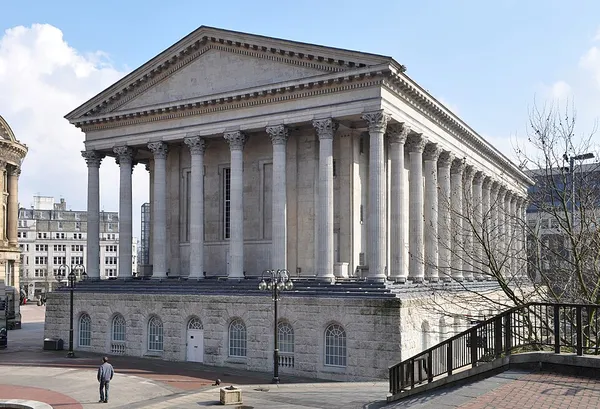
The culture of Birmingham, England, is characterised by a deep-seated tradition of individualism and experimentation, and the unusually fragmented but innovative culture that results has been widely remarked upon by commentators. Writing in 1969, the New York-based urbanist Jane Jacobs cast Birmingham as one of the world's great examples of urban creativity: surveying its history from the 16th to the 20th centuries she described it as a "great, confused laboratory of ideas", noting how its chaotic structure as a "muddle of oddments" meant that it "grew through constant diversification". The historian G. M. Young – in a classic comparison later expanded upon by Asa Briggs – contrasted the "experimental, adventurous, diverse" culture of Birmingham with the "solid, uniform, pacific" culture of the outwardly similar city of Manchester. The American economist Edward Gleason wrote in 2011 that "cities, the dense agglomerations that dot the globe, have been engines of innovation since Plato and Socrates bickered in an Athenian marketplace. The streets of Florence gave us the Renaissance and the streets of Birmingham gave us the Industrial Revolution", concluding: "wandering these cities ... is to study nothing less than human progress." The roots of this distinctive cultural trait lie in Birmingham's unique social and economic history. By the early 1600s the area had already developed a reputation as one where the traditional power of the aristocracy and the established church was weak, becoming a haven for incomers who did not fit in with established thinking elsewhere: religious non-conformists, scientific and literary free-thinkers, industrial entrepreneurs and political dissenters. The Midlands Enlightenment that followed in the 18th century saw the town's growth into an important centre of literary, musical, theatrical and artistic activity, and the emergence of an unusually tolerant, secular society, characterised by "unfussy conviviality ... lack of dogmatism ... and a sponge-like ability to absorb new ideas". This openness and cultural pluralism was further encouraged by the town's broad-based and entrepreneurial economic structure.
Also on this shelf
Chris Cuffaro.
Bill Schwab.
See also
Uncatalogued shelfText from Wikipedia; plate via Wikimedia Commons. Text CC BY-SA 4.0; plate freely licensed (see Commons). Source record. Images and catalogue data are reproduced from open-access collections.